
Cardano has become my favorite altcoin. I consider Bitcoin and Ethereum the blue-chippers of cryptocurrencies however Cardano may be the least speculative out of all the altcoins.
To explain better Cardano, I will try to explain what it is. Three full-time organizations are working on Cardano:
IOHK (Input Output Hong Kong)
Cardano is viewed as many as blockchain 3.0. A blockchain is simply a chain of blocks of information. You can kind of look at it like Wikipedia.
There are three main aspects about a blockchain you want to know about:
Security – Defined by its consensus mechanism or how participants in the network come to an agreement about a certain truth or record that should be recorded in that particular block of the blockchain. For bitcoin, its consensus mechanism is called proof-of-work. Computers have to do a lot of work called mining in to prove that they have the right history or data in the blockchain. The proof of work algorithm is highly effective and secure however it is slow and consumes a lot of energy. That’s why when many people think of bitcoin mining they think of these odd-looking computers or mining rigs.
Scalability – How many transactions you put through the network, how much data can you store on it, how big can the network get and how many people can it reach.
Decentralization. At the protocol layer, decentralization means that anyone can openly see the code that they’re running; what’s in the protocol, what it means, and that people can suggest changes to the protocol. At the next layer, the network layer, decentralization means that people who want to can easily and cheaply run nodes, put their transactions onto the network, and validate transactions of others.
Blockchain 1.0 technology is the transfer of decentralized money between two people without a middle man. This is what we see with Bitcoin. There is not much else to this technology, just that it works.
Blockchain 2.0 technology adds smart contracts and has much more conditions than simply a transfer of money. This is what we see with Ethereum. Cheaper and quicker than Bitcoin.
Blockchain 3.0 technology increases transfers per minute and utilizes the proof of stake protocol. This is what we see with Cardano, which uses the proof-of-stake model, which follows the ouroboros protocol: “Proof-of-stake answers the performance and energy-use challenges of proof-of-work, and arrives at a more sustainable solution. Instead of relying on ‘miners’ to solve computationally complex equations to create new blocks – and rewarding the first to do so – proof of stake selects participants (in the case of Cardano, stake pools) to create new blocks based on the stake they control in the network.“
Cardano is still in the creation phase of a crypto lifecycle so it is still very much volatile and speculative. Cardano’s development process is divided into five different eras: Byron, Shelley, Goguen, Basho, and Voltaire. These five eras make up Cardano’s roadmap.
My favorite aspect of Cardano is its Africa strategy which you can read more about here.
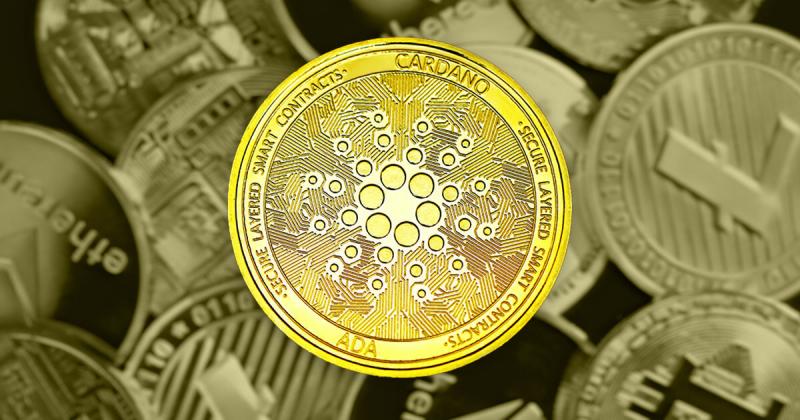
The reason why I invested in Cardano, is because I believe the project has substantive value. There is a story. The Africa strategy focuses on banking the unbanked in underdeveloped countries. This is why blockchain and cryptos have value. Traditional banking does not work for everyone, it is not considered universal banking. Imagine if internet routers were not backward compatible or if they were only compatible with one type of modem? How many fewer people in the world would be able to connect to the internet? Even in developed nations, we see people or businesses being unbanked. If you are starting a cannabis business, even in states where it is legal, most banks don’t offer services to these types of businesses. Or take example strip clubs, imagine how much easier transactions would be if they accepted crypto? It would be less expensive, faster payments, and more privacy for clients.
The other reason why I could see Cardano exponentially grow in value is that it is more sustainable than Bitcoin and that is the long-term social trend happening in our country. 54% of teens consider their carbon footprint when making a purchase. The most important social/political issue for Gen Z is the environment. There are thousands of cryptos in existence right now. The ones that will survive are the ones that have the network effect and actual value. I mentioned scalability earlier and Cardano has the potential to be more technically and socially scalable than Bitcoin and Ethereum.
I try to apply the same principles for long-term investing in stocks with cryptos. These are assets to hold in the long-term as they appreciate in value. A lot of people will refuse to even acknowledge cryptos as useful until it is fully mainstream. Remember in the 90s there were smart educated people that thought the internet was a fad. People like Jeff Bezos and Elon Musk were laughed at in business meetings. Being long on volatile assets can minimize your risk and provide exponential growth. Even having a rudiment understanding of cryptos or the blockchain puts you at a significant leg up over the majority of the population in regards to investment opportunities.
If these terms are foreign and make no sense, I completely understand. I am a novice in this space as well. This is early-stage tech. A lot of this terminology is still being defined and there isn’t yet standard terminology in the blockchain space. One important investing rule is to find order within chaos. Cryptos are extremely volatile because since it is new, you will see a lot of speculation. The space is filled with a lot of people who got lucky or believe they can forecast future prices or events with certainty. No matter how smart you are, in certain situations, smart people can make very stupid decisions. The Dunning-Kruger effect, coined by the psychologists David Dunning and Justin Kruger in 1999, is a cognitive bias in which poor performers greatly overestimate their abilities. I would be skeptical of those forecasting prices of any crypto. A famous economist John Kenneth Galbraith once said, “We have two classes of forecasters: those who don’t know and those who don’t know they don’t know.” My best advice would be skeptical, focus on the story and learn about the fundamentals, enough to want to keep learning more but open-minded enough to take advantage of new and exciting opportunities.
 Invest in Myself