“We believe AI can be a technology that helps deliver experiences and products to our customers in ways not possible before. This endeavor is not AI for AI’s sake, it is AI to help us improve what we are already doing.”
– REVOLVE founder and co-CEO Michael Mente

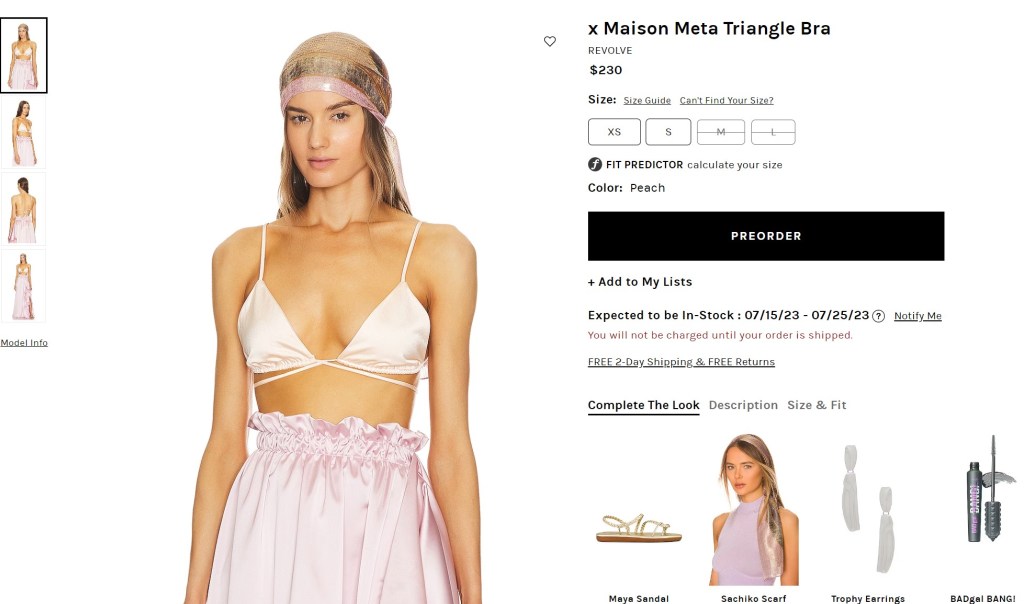
Due to mainly a harsh macro environment, Revolve’s stock has been getting crushed lately. I am unfazed and see every dip as a long-term buying opportunity. Here is why I am not worried:
The company is still net profitable and carries virtually zero long-term debt. Revolve can weather the storm of a waning economy where consumers cut back on discretionary spending.
Active customers, orders placed, and average order value did not decline year over year, which is a sign of brand resiliency and loyalty. Many quantitative analyses of Revolve vastly underestimate its branding and overestimate its year-over-year sales and net income decline.
The qualitative traits of Revolve are still quite strong. Brand strength alone can be a moat for an apparel brand and, in the future, make it more insulated from an economic slowdown.
A brand is tough to value in quantitative or Wall Street analysis because branding is more of an intangible art than a hard science. For apparel companies, brand strength is everything. Ask yourself why many customers pay for yoga pants from Lululemon or Air Force 1 from Nike. These companies don’t necessarily have a sourcing material or a proprietary technological advantage; they have a lifestyle brand advantage.
An aspirational lifestyle brand means creating a great product and a community that people are attracted to and aspire to be part of. Luxury brands attract fickle customers but are intensely loyal. These customers have a big appetite for big spending and shun mass-market offerings. Nike, Lululemon, Apple, and Louis Vuitton passed reasonable valuations and transformed into mega-cap companies.
Revolve is the department store of the future. You take Nordstrom or Sakes Fifth Avenue’s strength, their e-commerce/digital business, and strip out the drag caused by brick-and-mortar. You target exclusively the luxury demographic instead of a race to the bottom into mass marketing and discounting. It’s the perfect synergy of fashion, aspirational lifestyle, and e-commerce.
Revolve recently launched the world’s first AI-generated billboard campaign and invested heavily in the first AI Fashion Week, where the three winners’ collection is made and sold via Revolve or Forward.
I expect Revolve to be a big winner from Generative AI as they have already shown a commitment to growth and innovation. There will likely be a lot of big winners in this space if luxury fashion can profit from AI, but Revolve could be a big concentrated winner. They are investing in AI instead of other struggling retailers offering an unstainable 4% or higher dividend. Revolve doesn’t have the burden of underperforming retail stores, a bloated employee count, or archaic marketing initiatives. Revolve is currently a leader in a niche market, but AI can quickly turn that market much bigger in a shorter period. Think of a market cap 5-10 times bigger than it is now.
In the next three to five years, generative AI could add $150 billion, conservatively, and up to $275 billion to the apparel, fashion, and luxury sectors’ operating profits, according to McKinsey analysis. From codesigning to speeding content development processes, generative AI creates new space for creativity. It can input all forms of “unstructured” data—raw text, images, and video—and output new forms of media, ranging from fully-written scripts to 3-D designs and realistic virtual models for video campaigns. Generative AI has the potential to affect the entire fashion ecosystem. Fashion companies can use the technology to help create better-selling designs, reduce marketing costs, hyperpersonalize customer communications, and speed up processes. It may also reshape supply chain and logistics, store operations, and organization and support functions.
Generative AI: Unlocking the future of fashion
AI should make Revolve more efficient, creative, and, most importantly, more profitable. With luxury fashion, you hear a lot about a personalized experience, and that’s what Revolve provides: A curated boutique shopping experience for a demographic that primarily lives online. Sales are down, but the company is fortifying its brand by maintaining relevancy digitally and in real-life (sponsoring amfAR gala), continuing designer collaborations, and their investment in growth. AI will only improve Revolves ability to provide a super personalized experience to its customers.
 Invest in Myself