Coach: The Start of Something Special

I invested in Coach, now Tapestry (NYSE: TPR) in 2016. The company seemed like a solid value play with good growth potential. I liked the direction they were going. At the same time Coach made a $10 million deal with Selena Gomez to become the face of the brand. I thought that was an excellent move because at the time Gomez had 104 million followers on Instagram (now she has 255 million). It was a much-needed deal for a company that seemed to have lost its Je ne sais quoi, or “it factor” that gives life to a luxury brand. You know that “thing” that creates an emotional response and connection with a brand making you want to pay full price for their product instead of buying a discounted version on Walmart.

Although the company seems to have been making some strides the pandemic changed all that and paused everything. I bought TPR again last year as a solid rebound play and that worked out well as the company has recovered nicely. As I review TPR today I am extremely optimistic and believe there could be a growth storm brewing. The company is still undervalued from its Forward P/E and after patiently waiting I could realize massive gains.

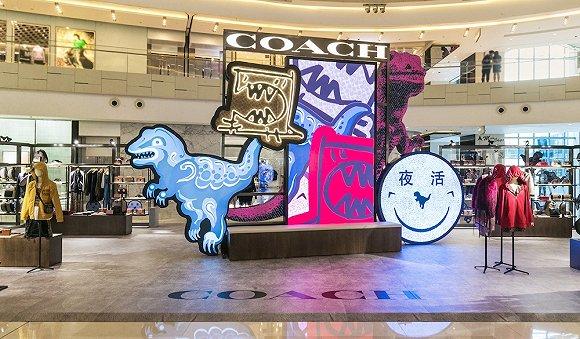
(Photo credit: Courtesy of Coach)

The stock has been dead money for almost a decade, I see that changing.

You can find the most recent Q4 earnings report for TPR here and the presentation here The numbers indicate the company is very healthy and growing. 117% revenue growth for Coach, 95% revenue growth for Kate Spade, and 146% revenue growth for Stuart Weitzman. Coach provides TPR with over 70% of its revenue so they are the main driver of TPR’s profits. The fact Kate Spade and Stuart Weitzman are doing well is a nice bonus for the company as a whole.

#1 Digital growth and engagement is key

The company said its online sales rose 35% from a year earlier. This was mainly driven by Coach, which drove over 55% of the digital growth. Coach is executing on their social media presence and e-Commerce channels in a big way. Coach has 5.4 million followers on Instagram which is surprisingly more than Revolve (NYSE: RVLV), a pure internet retail play. They have several TikTok campaigns which are rapidly creating buzz and new customers. Female Gen Zers and millennials are driving the growth and revitalizing of this 80-year old company.

I am extremely bullish on e-Commerce, specifically social media marketing. This is the future of the fashion industry. Digital growth has better margins than brick-and-mortar growth. If Tapestry can continue to execute on its digital growth, it will see more customers, maintain high margins and increase its brand integrity. When listening to interviews from the CEO of Tapestry, Joanne Crevoiserat, I am hearing a lot of the same verbiage that I hear from another company I am bullish on, Revolve. This is absolute music to my ears. Even just recently I viewed TPR as simply a recovery play that would get a nice boost as the pandemic eased up. Now I see TPR more like a true growth stock disguised as a value play.

#2 Brick-and-Mortar still matters and Tapestry is innovating their stores

Last year Coach opened its first digitally immersive store in Shanghai China, the IAPM mall. These are stores that use digital interactions leveraging virtual reality (VR) and augmented reality (AR). This is all connected to their Acceleration Program for Profitability which they announced last year. Tapestry is focused on delivering on its omnichannel and making a better experience for the consumer. From my viewpoint Tapestry’s strategy is a mix between Apple and Starbucks and so far it looks like it is working. Create appealing products, deliver a seamless consumer experience physically and digitally, strengthen the brand by making consumers care about them again.

#3 Expand in China

Sales grew over 60% in China. 62% of its revenue comes from North America whereas 19% from China. I eventually see the makeup of revenue 50% North America, 25% China, 18% other Asian countries, and 7% the rest of the world. For Tapestry to grow it will need to continue to penetrate the China market. China has an enormous middle-class population and Tapestry’s products are geared toward them. The sweet spot of a luxury handbag for someone in the middle class is about $400-600. Not $2,000-4,000. I have confidence they will carve their lane in the middle-class luxury demographic and who knows, in the future, they may have enough brand strength to compete with Louis Vuitton, Dior, or Prada.

#4 Simply Execute.

Victor Luis was the CEO from 2014 to 2019 and he failed to restore the brand. Jide Zeitlin resigned after 1 year due to personal misconduct allegations. That entire situation was odd, to say the least. Zeitlin, once nominated by Barack Obama to be a UN Ambassador was accomplished but had no real fashion background. Regardless, they seem to have hit a homerun with Crevoiserat, the CEO since October 2020. With stable leadership hopefully, they can take advantage of the talent they already have. Stuart Vevers has been the creative director at Coach since 2013. From most reputable people covering fashion and style, Vevers is a savant. He is very talented however it is hard for his work to shine if management cannot execute. Just like a master chef will suffer if given bad ingredients or incompetent staff. It seems they have figured it out. The truth is a lot of fashion retailers have actual plans in place towards profitability and shifting digitally. It’s really about executing on that strategic vision. That’s on management.

(Photo credit: Courtesy of Coach)

When you put a cake in the oven, there is no guarantee it will come out fully baked. A lot of things can go wrong. I view Coach as being many failed cakes the past decade. A lot of “almost there” and “close” but not complete. I think whatever is in the oven right now though, I think they got it right this time. I bought more shares of TPR recently, even with the stock being up significantly from last year. Despite the 1-year gain, the stock has been stagnant the past five years and lagging behind its peers.

Coach has been performing well in 2021. They brought in Jennifer Lopez as the new face of the brand. The Coach Pillow Tabby is trending on TikTok. The fashion world is believing in Coach again. Female Gen Zers and millennials are spending money on Coach handbags again in a significant way. Despite this, the stock is still undervalued. I don’t believe Wall Street has fully caught on to this story as the cake is still baking. When the story changes from simply a recovery open to a high-performing transformative global technology company, the stock will reach all-time highs.

Why I invest in Psychedelic Stocks

The Psychedelic industry is growing rapidly. This year I have invested in Psychedelic stocks, specifically Mind Medicine (MNMD) and COMPASS Pathways (CMPS). I understand the biotech sector is risky. The majority of drugs, like 90%, do not reach approval by the FDA. That being said, any successful investor needs to take at minimum a small measured risk in their portfolio. I believe these stocks or other companies in the psychedelic sector could potentially 10x before the end of the decade.

Photo by Merlin lightpainting on Pexels.com

My thesis: Psychedelic treatments can be part of the solution for treating depression, PTSD, addiction, etc.

The idea of psychedelics being used to help with mental health therapy is not new. There are enough studies and research that show it can be viable. Kevin O’Leary, most famously known from Shark Tank laid out his opinion here. I pretty much agree with almost everything Kevin said. There seems to be a lot of institutional money flowing into the psychedelic sector. Whereas cannabis seems more focused on recreational use and politically charged, psychedelics are about medicine and science. If you google Psilocybin, Ketamine, or Psychedelics, see how the search results differ from Cannabis or Marijuana. Psychedelic news seems more concentrated whereas the latter is kind of all over the place.

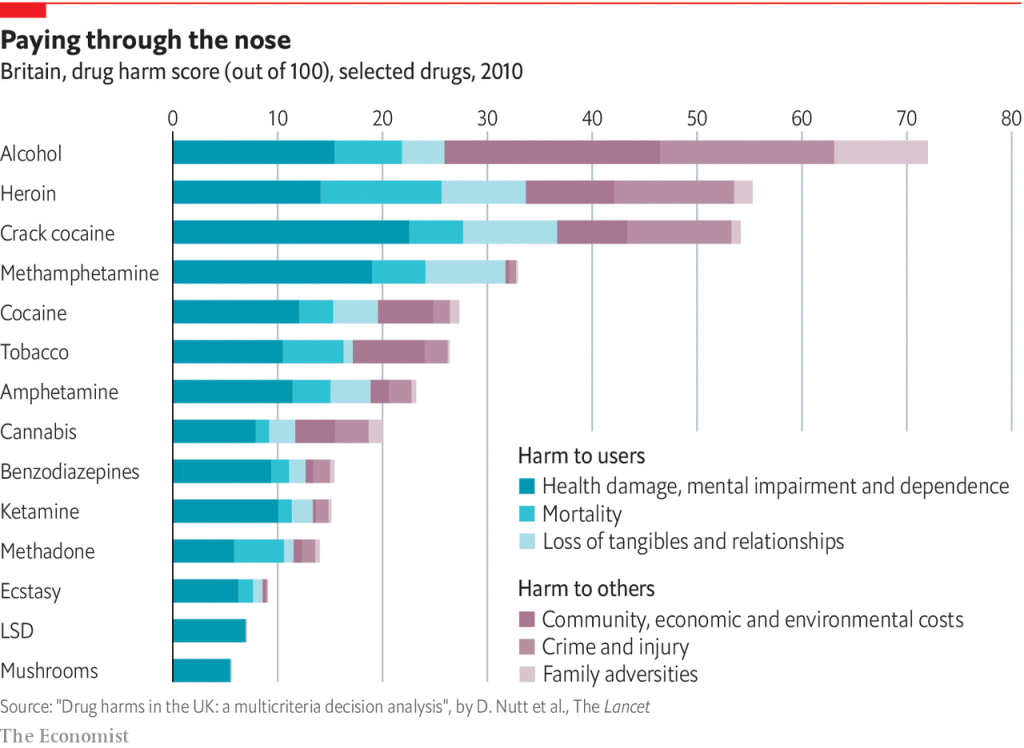
What also makes psychedelics an attractive option, is its relatively low drug harm score, particularly, harm score towards others, even compared to cannabis. Given this information, I think the pathway towards legalization and marketization will be a lot easier than it has been for cannabis, thus removing the barriers to profitability.

Thesis #2 The need for psychedelic treatment is growing due to an emerging mental health epidemic.

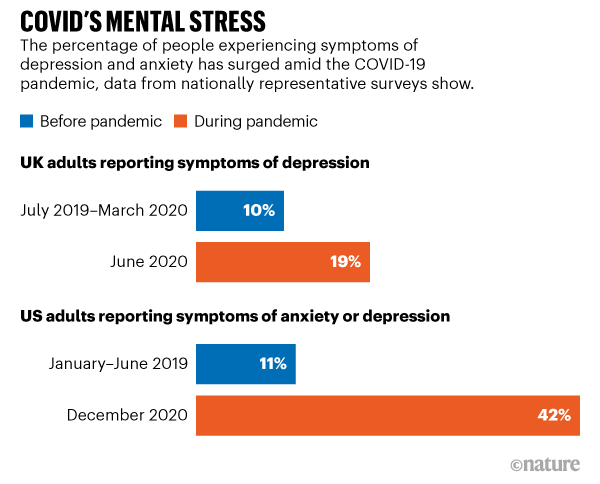
The #1 domestic issue for America is health care, and that was even before the pandemic! Mental health is linked with health care, and a lot more people are suffering from anxiety and depression. This problem has only exasperated because of the pandemic. I think the vast majority of the population would agree with this, however, we do not have enough viable solutions being offered. Nowhere even close. This seems to be an issue we kind of just sweep under the rug until the next mass shooting happens. We talk about addressing it, and then….. nothing happens, repeat cycle.

My experience:

I have volunteered over 230 hours as a Crisis text Counselor in 2020. I had over 1,000 conversations with people seeking help. I can tell you from my experience, mental health is a problem and getting worse. Collectively as a nation, we are so woefully behind in finding viable solutions, the problem is likely to get worse than it is better. Consider that many people think mental health is not an actual medical problem, just a temporary weakness that shouldn’t even be discussed, not even among family members. Given how serious this issue is, I believe psychedelics as a whole, will eventually make up a big space in the biotech industry.

At some point, mental health will become too much of a problem to ignore and our government will have to throw a lot of money into addressing the issue just like they did Covid-19. A practical solution would be a commercial low-dose psychedelic prescription drug. I don’t anticipate this to be a very partisan issue. Demand for such a product is already high because the marketplace has such a low supply of viable solutions in treating mental health issues. As we have seen with vaccines lately, if the problem is big enough, and there is enough willpower, we can speed along the process in getting solutions out to the public.

In Conclusion:

I have used psychedelics in the past. So did Steve Jobs who said, “Doing LSD was one of the two or three most important things I have done in my life.” So did the founder of Alcoholics Anonymous Bill Wilson, who believed LSD could help treat alcoholism.

I don’t know how to put in words how psychedelics affected me or how I felt. Based on my experience I felt an altered form of consciousness. In a controlled safe setting I could see how it could help someone with mental health issues or addiction.

I am not a scientist. I am not a financial advisor. I know biotech companies are risky. These companies pretty much live on binary events. Based on my experiences and the scientific research that has been conducted, I think psychedelic stocks in general, have something worth investing in.

This story could take years to play out however as retail investors we have a major advantage over fund managers and analysts. We don’t have to focus on short-term profits. I am fully content having this section of my portfolio in the red before the actual story materializes. The research has merit and the problem is big enough that even a mediocre solution could cause this sector to expand dramatically.

We are still in the beginning stages of this journey. I am personally rooting for success in this industry and so should you. Mental health and addiction are such serious issues that have an extreme negative cost on our economy. It is such an overwhelming topic, we don’t even talk about it in depth because solving it seems impossible. In regards to an investment opportunity for me, this is a trip worth taking for the long run. I believe it will go from a speculative industry to a legitimate billion-dollar industry. Those companies on the forefront right now could reap major rewards.

Alibaba is Still a Screaming Buy!

Alibaba (BABA) is still a screaming buy. It is an undervalued growth stock that will likely 3x in price in the next 5 years or less.

  • Big profits and gains are made during intense fear and uncertainty. This is usually the best time to buy, not sell.
  • Baba’s income statement/growth/balance sheet remains pristine. The headlines have nothing to do with Baba’s business. Jack Ma hasn’t been chairman of the company for nearly two years.
  • Macro headwinds like China Regulations will always exist. They exist in every country/continent. They will never go away.
  • If you fear China that much, you should probably not own great stocks like Tesla, Starbucks, Apple, Nike, etc… you may want to avoid investing altogether since almost every company touches China.
  • China makes up 17% of the entire global economy. One day it could overtake the United States. They are too big to fail. Why do you think John Cena or Mark Zuckerberg can speak Mandarin? Like it or not, China is here to stay now and in the future. They will be a major player in digital innovation and growth.
  • Although the majority of my investments are in U.S companies, ignoring China Tech entirely is too risky.
  • What is more likely, Alibaba reaching a stock price of 592.14 or Amazon reaching 10,098.72? The answer seems obvious. What’s holding BABA down is regulatory scrutiny which goes in cycles. Amazon, Google, Facebook, Twitter will also go through regulatory scrutiny in the near and mid-term future. Remember, there are multiple elected officials from both parties that support breaking up U.S big tech and bringing on federal lawsuits against these companies.
  • Two key traits of any long-term investor are patience and calmness.

This is Alibaba’s Cambridge Analytica moment.

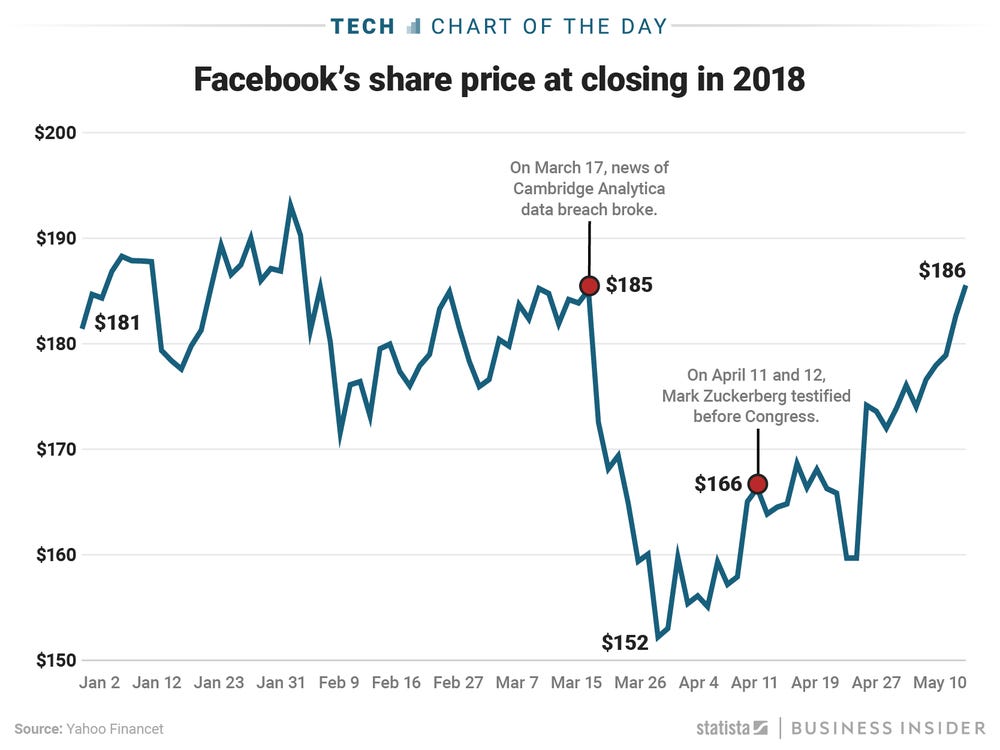
If you forgot what happened to Facebook, I’ll provide a brief refresher. Cambridge Analytica was a British political consulting firm that took information from more than 50 million Facebook users without their consent. It has used Facebook to collect data that was used by the Trump campaign in 2016 to target voters. The result:

  • Numerous top executives left the company. Former executives trashed the company on media.
  • Shares fell more than 24% on March 26th
  • The company lost $134 billion in value
  • Facebook’s favorability rating fell significantly. Numerous celebrities, politicians, and important people in the tech community supported the #DeleteFacebook movement.

The reason why Facebook didn’t die, is because their ecosystem is too vast. Cambridge Analytica was a small bump in the road. They have become so embedded in our culture, it is essentially impossible to delete them. Buying FB stock during the scandal and holding today would have been a great investment opportunity. Many investors however were being prisoners of the moment.

I see China’s regulation as Alibaba’s Cambridge Analytica moment. Many smart people looking at BABA today, are only looking at a page in a long book still being written. Alibaba in 2021 is a much stronger company than Facebook was in 2018. Their financial and cultural reach in China is larger than Facebook’s reach is in the United States.

The Chinese Communist Party couldn’t delete Alibaba, even if they tried. The genie is out of the bottle, it is simply too late. Unless the CCP’s goal is to cause irreparable harm to their economy, coolers heads will eventually prevail. BABA is still growing in China and expanding its reach outside of the country as well. They will kiss the ring and oblige with The China Securities Regulatory Commission (CSRC). They will do the same political lobbying/dance that mega-corporations do in the U.S. The players are different but the game being played here is essentially the same.

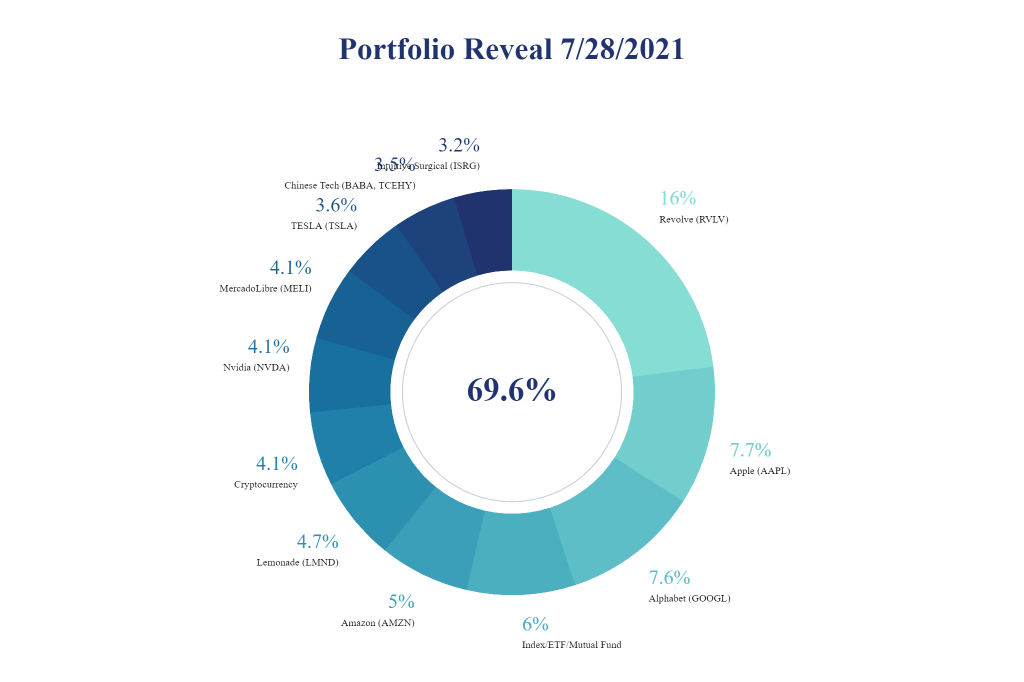
Partial Portfolio Reveal

Photo by Andrea Piacquadio on Pexels.com

This is a partial reveal of my entire investing portfolio showing how weighted I am in certain stocks. Just some quick random thoughts.

  • RVLV is my highest position obviously but I am comfortable with it. Remember, it didn’t start out at 16%. During the beginning of the pandemic it was barely 5%. I will hold onto this company for a long time. I have so much conviction in this company I wouldn’t start trimming my position until it made up 25% of my portfolio.
  • I have been contemplating trimming some of my initial position on GOOGL. I already have done so for AAPL, AMZN, TSLA and NVDA. I probably could never sell the majority of my position though. The company still has a lot of growth left.
  • I will view my holdings in Index/ETF/Mutual Funds as a safety position. It is tempting to sell them and invest in individual stocks, however I view this as my original floor of when I started as an investor.
  • I am quite happy regarding my Cryptocurrency position. Many “fund experts” are saying you should only invest 3-5% in Cryptocurrency. The majority of my cryptocurrency is in BlockFi gaining monthly interest just for holding it. I kind of view it like a high-growth dividend stock.
  • If I had to predict, I could see Crypto, NVDA, LMND and Chinese Stocks being a larger part of my portfolio in the future. LMND is in its early growth stages as a company. Chinese stocks like BABA and Tencent are highly discounted right now.
  • The rest of my holdings consists of other companies that I do not have a big enough position too list. I am obviously trying to find the right mix of diversification/concentration.

Forget FANG, Look into MINT

Photo by Daria Shevtsova on Pexels.com

Jim Cramer, the well-known host of “Mad Money,” created the acronym FANG in 2013, a cute play on words to describe four popular/high-growth tech stocks:

Facebook
Amazon
Netflix
Google

Before that, in 2010, Cramer created the acronym CANDIES, which preceded FANG.

Chipotle
Apple
Netflix
Deckers Outdoor
Intuitive Surgical
Express Scripts
Salesforce.com

Many of these stocks from FANG and CANDIES are still worth owning today; however, do these companies still hold their weight in 2021? It may be time to coin a new acronym to reflect the high-growth companies for this upcoming decade.

I purpose MINT. If you own any of these stocks, I recommend you hold them. If you don’t own them, consider adding them to your portfolio. These are all long-term holds for at least 3-5 years. These companies represent some of the best growth in the hottest sectors. I would expect these companies to still be highly profitable by 2030.

Mercadolibre (MELI) is a mix of Amazon, Paypal, Square, and eBay all-in-one. It mainly operates in Brazil, Argentina, and Mexico, but 18 total countries in Latin America. This was a great growth stock before the pandemic and an even better stock post-pandemic. If you believe that eCommerce and fintech will continue to grow, believe in Mercadolibre, whose e-commerce revenue grew over 90% in 2020. They are following an Amazon script in a region ripe for opportunity.

The other reason to love Mercadolibre is Mercado Pago. Great growth companies can expand and become leaders outside of their core business. Even if they lose market share to their competitors, the opportunity and expansion in other countries are nearly unlimited. Having a smaller market share in eCommerce or fintech is somewhat irrelevant if the overall market continues to expand rapidly. Latin America is still largely underserved financially. Many still don’t have bank accounts or internet access. As Latin America fintech booms over the next decade, Mercadolibre’s overall ecosystem will grow. Oh, did I mention they are also getting into bitcoin?

Intuitive Surgical (ISRG) They have a monopoly on minimally invasive robotic surgeries. They are the leader today and will likely be the leader a decade from now. There is competition ahead however, this industry will continue to grow rapidly. As innovation and technology improve, the number of procedures assisted by robotic surgeries will increase. The population is getting older meaning demand will continue.

Nvidia (NVDA) One of the biggest mistakes investors can make is the idea you need to invest in a new idea or the next big movement. Don’t turn stocks picking like fashion trends. Your oldest idea may be the best idea and make you wealthy. Here is the theme I will repeat: Nvidia was a great company before the pandemic. It is an even better stock post-pandemic. Nvidia gets the majority of its revenue from its graphics processing units (GPUs). When you think of GPUs, think of Artificial intelligence, Video Games, Computers, Crypto Mining. Nvidia has recently expanded into data processing units (DPUs) and that business could be more profitable than its chip business. Nvidia has been smashing earnings and could soon become the most dominant tech company in the world eventually.

Tencent (TCEHY) Tencent is a mix of Facebook, Activision Blizzard, and Spotify, all rolled into one company. It is much bigger than that. Think of the Berkshire Hathaway east. If you are interested in growth companies, you cannot ignore the most populated country in the world. There are geographical/macroeconomic concerns, but with risk comes a great growth story. Ignoring all Chinese growth and having too little or no exposure to this industry will be a potentially enormous missed opportunity for any investor. Tencent is a high-growth company with its hands in other high-growth companies like Tesla. Please do not ignore it.

My Best Investing Advice

Photo by John Guccione http://www.advergroup.com on Pexels.com

Investing can seem daunting but it really shouldn’t be. Here is my best advice for all investors new and old;

  • Hold for the long-term

Studies have shown holding on for the long-term, even during significant down periods will build wealth. Macroeconomic/Geopolitical risk will always exist however reliable companies tend to trend upwards in the long term. Investing in the long-term will also save you money from short-term capital gains taxes.

  • Less about IQ/Financial acumen, more about temperament and psychology.

I think Warren Buffett said it best:

“You don’t need tons of IQ in this business.” “You need a stable personality,” he continued. “You need a temperament that neither derives great pleasure from being with the crowd nor against the crowd because this is not a business where you take polls. It’s a business where you think.”

Warren Buffett on investing

  • Beginners should start with ETFs/Index Funds/Mutual Funds before Stocks

If you have never invested, I would advise starting on buying an index of stocks before single stocks. It could better prepare you mentally. Beginners should consider starting a new portfolio like baking a cake from scratch. You have to start somewhere, starting with a large basket of stocks is a great way to begin in your investing journey.

  • Savings and indexes shouldn’t be your end game

The ability to save your money is important and a prerequisite before investing, however, it shouldn’t be your end goal. Savings and fixed cash investments will not pay off in the long term. Indexes provide a nice safety net/buffer however taking on risk can pay off in the long term.

  • Have an investor mentality

When you buy a stock, you are an investor of that company, so act like it. Make decisions on the fundamental news of that company and not the stock price, which may not accurately reflect the value of that company’s worth.

  • Always be invested in the market or be prepared to do so

You should always be allocated in the market but have some cash reserves available when the right opportunity comes. Not being in the market, even 1 day could mean losing out on significant gains. Not all of us are cash-rich or have a six-figure income to provide us with consistent investing capital. I would consider selling stocks of companies you have less confidence in if you have stocks in mind with a higher conviction to invest in. When the stock market is “good,” or companies are hitting 52-week highs/all-time highs, that is usually the time I start building my cash reserves. When the stock market is “bad,” that’s usually when I consider buying. You need to think about your next move and the move after that. Look at investing like a game of chess.

  • Stay diversified but concentrated

Stay diversified in different stocks, sectors, sized companies (small, mid, large-cap) risk allocation. Most brokerage accounts have tools to show how diversified your portfolio is. If you have multiple brokerage accounts, a good tool I use is Claritus which is a free way to track all your investments. Diversification is important, but your portfolio should always remain focused on your own investment principles.

Remember, long-term investing is a beautiful struggle. It is not a way to get rich quickly. Don’t think of buying stocks like buying a lottery ticket but a slow burn towards something great. Not investing at all? I would describe that as simply a struggle. Without investing, you could see your net worth erode in the long term.

Free $45 ClassPass Gift Membership

Thanks for reading my content. As a thank you I want to reward one lucky subscriber to a $45 ClassPass Gift Membership! Just send me a message of your favorite movie of all time and the first person will get a $45 promo code which can be redeemed at ClassPass

Thank you!

Photo by cottonbro on Pexels.com

Sign up for Moomoo and get up to 4 free stocks: moomoo

Plus, refer 2 friends and if they each deposit $100, you’ll earn a free Apple Stock!!

Why I Love Revolve Group Stock

As we navigate past the pandemic I am bullish on Revolve Group, Inc. (NYSE: RVLV). Just a bit about Revolve, from their website on the investor relations page:

CREDIT: RAISSAGERONA/INSTAGRAM

REVOLVE is the next-generation fashion retailer for Millennial and Generation Z consumers. As a trusted, premium lifestyle brand, and a go-to online source for discovery and inspiration, we deliver an engaging customer experience from a vast yet curated offering totaling over 49,000 apparel, footwear, accessories and beauty styles.

Revolve Group, Inc. – Investor Relations

When I evaluate a company, I try not to look at the stock price, I look at the fundamentals of the company. Where will Revolve be in a year, five years, a decade, longer?

In my quick analysis, I believe Revolve is the future of fashion retail. E-commerce sales in 2021 account for roughly 18-19% of total retail sales. Over time that number will only get bigger and Revolve is already years ahead of their competition. They utilize social media influence marketing which their competitors are just starting to incorporate. Investing in RVLV is essentially buying a long-term call option on E-commerce growth, Social Media growth, and Influencer marketing, all trending upwards.

I own RVLV stock. It makes up the highest percentage of my portfolio. Now it wasn’t the biggest when I bought it aggressively in early 2020, but I don’t plan on selling any of my shares anytime soon. I will admit, the past six months I have been tempted to sell at least a portion of my position as the stock price dramatically increased but the more I evaluate the company, I see no reason to.

Anytime you are considering buying a stock, you should have at least a few fundamental reasons why, aside from the stock price. Here are a few of my whys:

  • The secret sauce of Revolve is in its technology/AI/data analytics

Competition in this space is fierce however Revolve uses social media and influencer marketing which gives it a leg up over its competition. Sure, other fashion retailers will eventually adopt these sale marketing strategies but this is what Revolve has already been doing and their E-commerce presence is strong and growing. Just to give a comparison, on Revolve’s official Instagram page, they have 4.7 million followers, compared to Lululemon, 3.7 mil, Nordstrom, 3.4 mil, and The Gap, 3.1 mil.

While these fashion retailers are playing catch up, Revolve’s brand will only get stronger. Brand name recognition in retail is vital. Last year, for example, I won a free Yeti cooler that was retail worth $200. I sold that Yeti Cooler for its retail cost. Now, why a consumer would pay $200 for a Yeti Consumer instead of a Coleman cooler worth about $50? I cannot provide a logical answer however based on Yeti’s sales, that just shows you the power of a strong brand name. Using an example of another fashion retailer, Lululemon sells sweatpants/yoga pants for over $100 and they have consistent growth. This shows a strong Brand name + Successful marketing = Really good gross profit margins and higher average order value. There is no need for Yeti to discount their coolers or for Lululemon to mark down on yoga pants. Revolve’s juicy margins are a big reason why they have an impressive financial balance sheet.

  • This is a Warren Buffet type stock:

Warren Buffet touts companies with strong management teams, consistent cash flow/revenue, and minimal debt. This fits Revolve to a tee. A management team with a strong financial/analytical background in an industry that has relied too heavily on art/trends instead of science/data. A company with nearly zero debt with consistent revenue growth.

Christian Vierig/Getty Images
  • Post pandemic recovery with catalysts in play:

Revolve was hit hard by the Pandemic. Although they are an e-commerce retailer that survived and stayed strong financially last year, they aren’t Amazon. What is impressive is that they found revenue growth outside of festivals and live events during the shutdowns and closures. As things open up, they should experience a boost in sales like most consumer cyclical companies. Revolve festivals will return and management should consider better monetizing/expanding when the pandemic eases up. International expansion and Revolve’s men section, “FWRD Man,” are only in the beginning stages and represent future growth catalysts for this company.

If you are a middle/upper class female millennial or early Gen Z you probably know why Revolve is successful. This company speaks to that demographic. For everyone else, you might be scratching your head wondering how Revolve is different from the thousands of other fashion retailers. The reality is FOMO celebrity trends are real. People will pay $500 for a Balenciaga T-shirt or over $4,000 for a Valentino dress and that won’t change anytime soon. Revolve through their technology can predict the right trending items and stay financially consistent, which shows in their steady quarterly sales growth.

Revolve is a great company in its early stages. I don’t know if they have enough catalysts or growth ahead to create generational wealth like Tesla or Amazon, but I view them as a relatively safe mid-tier growth company with mid-level risk in the upcoming five years. If you believe in future E-commerce growth and social media being more prevalent in society, Revolve will be there alongside to reap the rewards. This is a really exciting time to be a Revolve shareholder as they are just entering their high-growth period. Meanwhile, traditional retailers are playing catch-up. As long as management continues to execute, the Revolve empire will stand strong by the end of this decade.