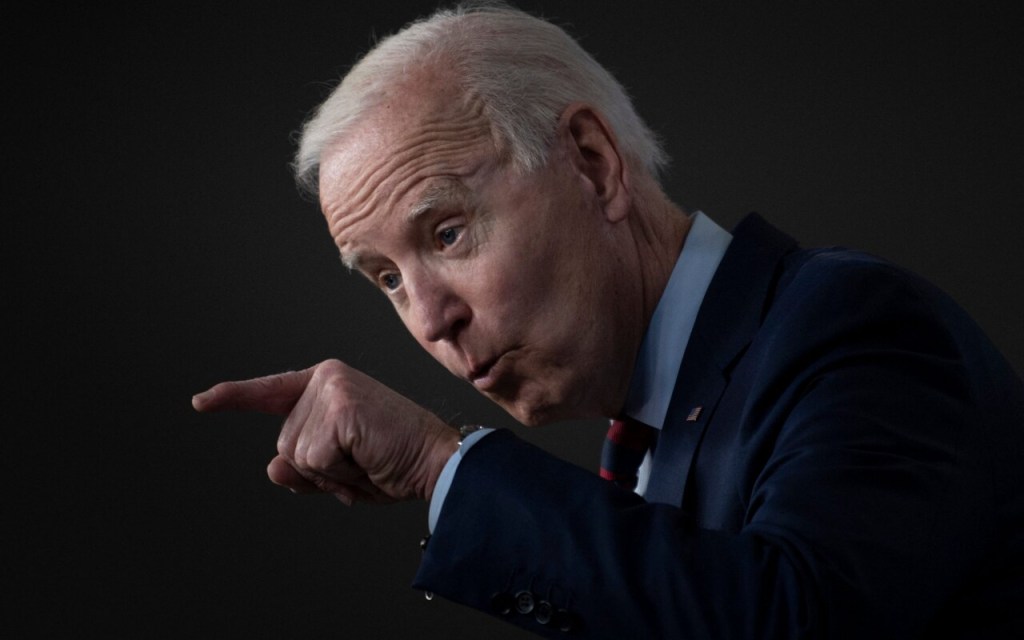
“I didn’t give any false hope,” answered President Biden to Fox News reporter Jacqui Heinrich. “The question was whether or not I would do even more than was requested. What I did, I felt was appropriate, and was able to be done and would get done. I didn’t give borrowers false hope. But the Republicans snatched away the hope that they were given, and it’s real, real hope.”
It’s official: President Biden broke his promise to cancel student loan debt, and he’s deflecting blame onto the Republicans and the Supreme Court.
Let’s first establish Biden did break his campaign promise. Biden at a Town Hall in Miami: “I’m going to eliminate your student debt if you come from a family [making less] than $125,000 and went to a public university.” Biden also said, “I’m going to make sure everyone gets $10,000 knocked off of their student debt.”
Why did Biden make this promise? It was to fulfill an agreement made to Bernie Sanders, who advocates canceling all student debt. Biden’s campaign promise helped him cinch the Democratic Party nomination and invigorated younger voters to come out and vote for him during the election. We don’t know if this promise was the deciding factor in Biden winning the presidency, but it sure looked like it helped bring out voters who sat out the 2016 election.
The troubling aspect of this promise is that Biden likely knew he would have trouble keeping it. Former House Speaker Nancy Pelosi said at a press briefing, “The president can’t do it.” “That’s not even a discussion.”
I also find it hard to believe Biden, a career politician, thought he could bypass this Supreme Court. As a US Senator, Biden voted against the nomination of Clarence Thomas, John Roberts, and Samuel Alito, three Bush-appointed Justices. Did he think the three Trump-appointed Justices would let his relief plan pass?
I doubt Biden was unaware of the slim probability of his plan passing. Now the millions of borrowers of federal student loans that trusted their president would come through for them are left with that feeling of being bled dry from a bloodsucking vampire.
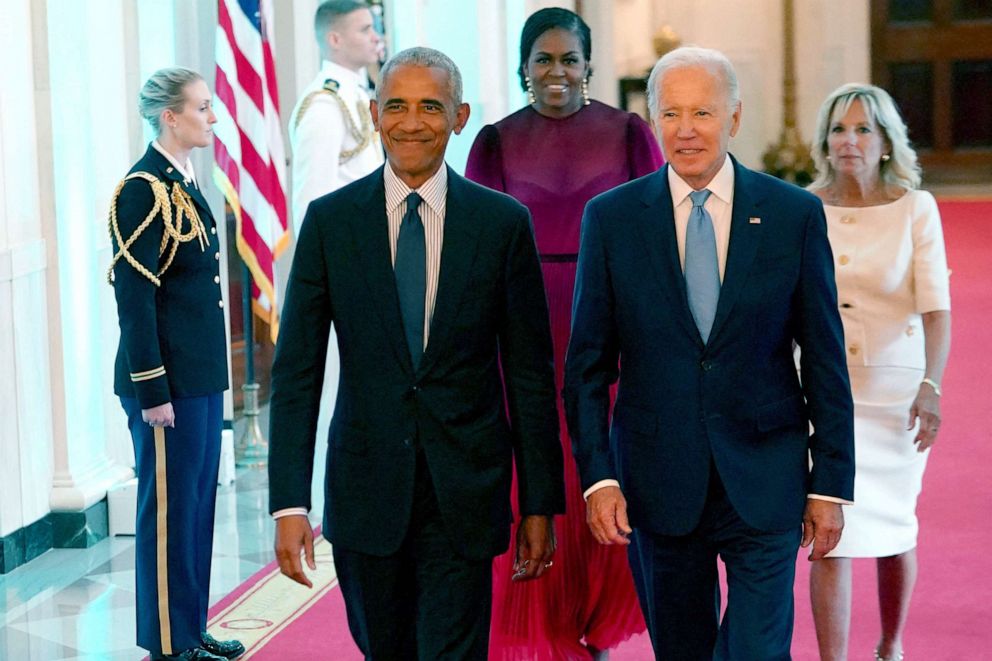
This administration has misled millions of borrowers, and the blame should fall on Biden. Many of these borrowers need relief and have already allocated these funds towards other obligations like food and rent. The default blame from Democrats will go toward the Supreme Court. However, the court’s current makeup was a product of Barack Obama’s inability to fight Republicans.
The Democrats received a major political win when Antonin Scalia passed away during the end of Obama’s second term. Scalia was not even 80, and the Democrats were poised to swing the court left. Unfortunately, Obama’s terrible relationship with Republicans caused his nomination, Merrick Garland, to go un-nominated, allowing Trump to fill the vacancy. Republicans one-upped Obama where Republican Senate majority leader Mitch McConnell said, “One of my proudest moments was when I looked Barack Obama in the eye, and I said, ‘Mr. President, you will not fill the Supreme Court vacancy.'”
Obama’s second mistake was his failure to pressure Ruth Bader Ginsburg to retire during his two presidential terms. He never even formally asked. It ended up being a political misfire as RBG was an aging liberal Supreme Court justice with a health history of cancer. If Obama had succeeded, he could have brought in a young liberal judge on the bench for decades, allowing Democrats to have a say in the complexion of the court. Sadly RBG passed away, and Trump replaced her with Amy Coney Barrett, a significant coupe for Republicans.
The Supreme Court should have a 5-4 liberal-lean. Still, Obama refused to engage in hard-ball politics to fight the Republicans or convince a justice that shared his political ideology to retire. Obama had the opportunity to appoint Garland via an executive order called a recess appointment but failed even to try. This administration’s theme was one of capitulation and compromising to Republicans that took more than they gave. Because of these failures, it will likely leave the Supreme Court as a thorn towards liberals for the next few decades.
Joe Biden is a politician trying to win your vote for him and his party. The problem with politics is that most politicians don’t do enough to earn their worth in office. When the central theme of your messaging is that we’re not as bad as the other side, it produces lackluster and uninspiring results. Imagine going on a date, and your date’s main selling point is, “I’m not as bad as other guys/girls, you know.”
My message to borrowers affected by Biden’s lie is to accept what happened and take these student loans for what they are: a bad investment. Expecting the government to provide relief is ironic when the government is the biggest culprit for this student loan debt balloon.
In a situation like this, it could be helpful to remember the serenity prayer: “God grant me the serenity to accept the things I cannot change, the courage to change the things I can, and the wisdom to know the difference.”
No Democrat or Republican will come on a white horse and save you. If you want a nest egg with a shot at retirement, you must rely on yourself. Taking action now is within one’s control. As an investor, I have made plenty of stupid mistakes. However, I am not expecting or asking the government to backstop my lousy investing decisions. I learn, move on and become a better investor. Wiping all or a portion of your student loans can help, but it isn’t a panacea solution to lift millions out of poverty.
As a customer of CLEAR Plus, I would be leary of investing in the company. Although it has intriguing growth prospects and its service seems entrenched in airports, I see several red flags looking ahead. Since this is a newer high-growth stock, I will not touch on the balance sheet, its negative net income, or growing stock-based compensation, but focus on what I see as fundamental flaws with its qualitative aspects. I usually only talk about companies I like, but CLEAR has a unique business model worth a shallow dive into.
Uninspiring story:
The company started in 2003 as Verified Identity Pass, founded by Steven Brill (founder of Court TV) and Ajay Amlani. The company went bankrupt in 2009 but was resurrected in 2010 for only $6 million by Caryn Seidman-Becker and Ken Cornick, two former hedge-fund managers who had to close their funds after the recession.
There is not inspiring about this story. The original founders bailed out of the company before the boat sunk, and the new founders look at this company as a profit machine rather than a business that can fundamentally change the world; that’s my perspective. The story wouldn’t matter if CLEAR were a more stable company with a longer track record. This is a red flag for a younger company with negative earnings per share trying to grow its footprint.
An alarming amount of bad reviews from customers and employees:
You can scour the internet, but CLEAR has a relatively high amount of 1-star and negative reviews from customers and employees on Glassdoor. Based on what I saw, many reviews complain about potentially predatory and unethical sales tactics pushing people at the airport to sign up for a membership. Although negative reviews are inevitable, the sheer volume of bad experiences is troubling and potentially damaging for its brand. I don’t consider CLEAR a scam, just a poorly rolled-out consumer subscription product pushed by salespeople trying to make commissions.
The value proposition of a $189 CLEAR Membership is unclear:
As a former cardholder of the Amex Platinum, the entire $189 CLEAR membership was covered by American Express. I would not pay $189 out of pocket. That is my view and the consensus of those in the travel and credit card rewards community. It is not a good sign when the value of your flagship product is perceived as an overpriced service by the average consumer.
TSA PreCheck is $78 for five years. Global Entry is $100 for five years. CLEAR Plus is a whopping $189 for one year. Those who get the most from CLEAR are frequent travelers but do not get guaranteed expedited service at the airport, making the value of a Plus membership questionable.
Here we have a conundrum with CLEAR Plus: The more people that get the service, the less convenient it becomes, as the express line gets just as long as the regular ones. If everyone jumps the line, the line jumpers no longer receive expedited service. If TSA PreCheck travelers wait only 5-15 minutes or less in their security line, the value of CLEAR Plus becomes obsolete. There is no point in paying for a service to jump the queue when there are only a few people in the line, to begin with.
Amazon has over 200 million Plus subscribers. Costco has 124.7 million members. Netflix has 74.4 million US Customers. CLEAR Plus has 15 million subscribers. CLEAR Plus, as far as consumer airport subscription service goes, has limited growth and runway because the number of people that benefit from it is limited. You strip away all the members that get CLEAR Plus for free or at a discounted rate; the growth numbers are not impressive. Annual CLEAR Plus net member retention is stable above 90% because of all the subsidized subscribers. The most troubling aspect of this service is that the more they grow their subscription business, the worst the user experience becomes. I am starting to question the business model. CLEAR Plus would work much better if it ran like Planet Fitness, where most people with $10 memberships rarely go to the gym.
A threat of a data breach would be a death knell:
CLEAR has your biometric health data and other personal information. Any security breach would be embarrassing, given their name and an existential threat to the company. Meta could withstand the backlash from a data breach and quickly pay off any fines issued to them. Even a smaller company like Block or Equifax has vast resources. CLEAR does not have the brand equity or financial security to get caught up in a data breach. How many companies have your fingerprints and retinal imaging? Such a scenario would be catastrophic, and the TSA already reported CLEAR to have “security vulnerabilities.” I see the TSA, Republicans, and Democrats quickly throwing them under the bus, which would devastate a company still in its early growth stage.
Amazon and Google can eat their growth:
For CLEAR to be a big winner, they must be the identity verification of everything – retail transactions, payment information, biometric ticketing, self-service check-in, etc. If they achieve this lofty goal, the stock will likely be a big winner, but is it likely? Amazon is already in this space with Amazon One and its palm-reading scanner. Google is also in the authentication game. Why risk investing in CLEAR when Amazon and Google have more robust platforms? Amazon’s CEO Andy Jassey and their leadership can quickly implement its palm-scanner service with Amazon Prime and roll out their service to their partners already in place.
Although investing in CLEAR is a better bet to grow than any airline, this is not a company I would be comfortable holding long-term. The B2C business model is flawed. The target demographic for their product, frequent travelers, can get their flagship product at a discounted rate or free. The consensus among people who travel one to three times a year agrees that CLEAR is not worth paying the annual price. Unless they can provide more value for a subscription, I see a substantial price cut to maintain growth numbers.
Biometric authentication will likely grow in market size over the years. Still, CLEAR will not be a big winner in this space with just a moat in airports, even though they have competition in the United States and globally. I don’t blame anyone holding the stock long-term, as I see the potential long-term vision. I need more confidence management can execute their lofty goals. For the company to be a big hit as an investment, the story needs to be about strategic partnerships and growth on the B2B side. CLEAR is off to a great start with partnerships with LinkedIn, Delta Airlines, United Airlines, and Avis, but that could be hurt by brand degradation from mounting bad reviews. Also, there are serious security concerns. The average consumer may have no issue with trading their data for convenience, but this risk creates potential for government intervention, which is a negative catalyst for future growth. Amazon is likely tepid in expanding on its One service until they get a better read on how the government will react.
Conclusion: An intriguing business with potential, but there are other opportunities in the market with more upside and fewer risk factors. As a CLEAR Plus customer, I will only renew my subscription if it’s free. Paying for a service to jump a line is a weird business model. I wonder if it benefits society or solves an existing problem. I do not see a strong need or urge for the services CLEAR offers on the consumer side. The B2B aspect of biometric services is intriguing, but the future is obscure in a competitive sector featuring more prominent players with cash to burn. But this is just a preliminary review of the company. This could be an excellent investment if you have more extensive knowledge of CLEAR’s plans, technology, patents, and biometrics. Based on my analysis, I see too many landmines that can blow up an investor’s portfolio.
“We believe AI can be a technology that helps deliver experiences and products to our customers in ways not possible before. This endeavor is not AI for AI’s sake, it is AI to help us improve what we are already doing.”
– REVOLVE founder and co-CEO Michael Mente
@aria.phenix made it to the Top 10 in AI Fashion Week. The final collections will be made into real-life garments as part of our fashion incubator in partnership with @revolve
From a concept created on Midjourney transformed into a real-life design for sale on Revolve.
Due to mainly a harsh macro environment, Revolve’s stock has been getting crushed lately. I am unfazed and see every dip as a long-term buying opportunity. Here is why I am not worried:
The company is still net profitable and carries virtually zero long-term debt. Revolve can weather the storm of a waning economy where consumers cut back on discretionary spending.
Active customers, orders placed, and average order value did not decline year over year, which is a sign of brand resiliency and loyalty. Many quantitative analyses of Revolve vastly underestimate its branding and overestimate its year-over-year sales and net income decline.
The qualitative traits of Revolve are still quite strong. Brand strength alone can be a moat for an apparel brand and, in the future, make it more insulated from an economic slowdown.
A brand is tough to value in quantitative or Wall Street analysis because branding is more of an intangible art than a hard science. For apparel companies, brand strength is everything. Ask yourself why many customers pay for yoga pants from Lululemon or Air Force 1 from Nike. These companies don’t necessarily have a sourcing material or a proprietary technological advantage; they have a lifestyle brand advantage.
An aspirational lifestyle brand means creating a great product and a community that people are attracted to and aspire to be part of. Luxury brands attract fickle customers but are intensely loyal. These customers have a big appetite for big spending and shun mass-market offerings. Nike, Lululemon, Apple, and Louis Vuitton passed reasonable valuations and transformed into mega-cap companies.
Revolve is the department store of the future. You take Nordstrom or Sakes Fifth Avenue’s strength, their e-commerce/digital business, and strip out the drag caused by brick-and-mortar. You target exclusively the luxury demographic instead of a race to the bottom into mass marketing and discounting. It’s the perfect synergy of fashion, aspirational lifestyle, and e-commerce.
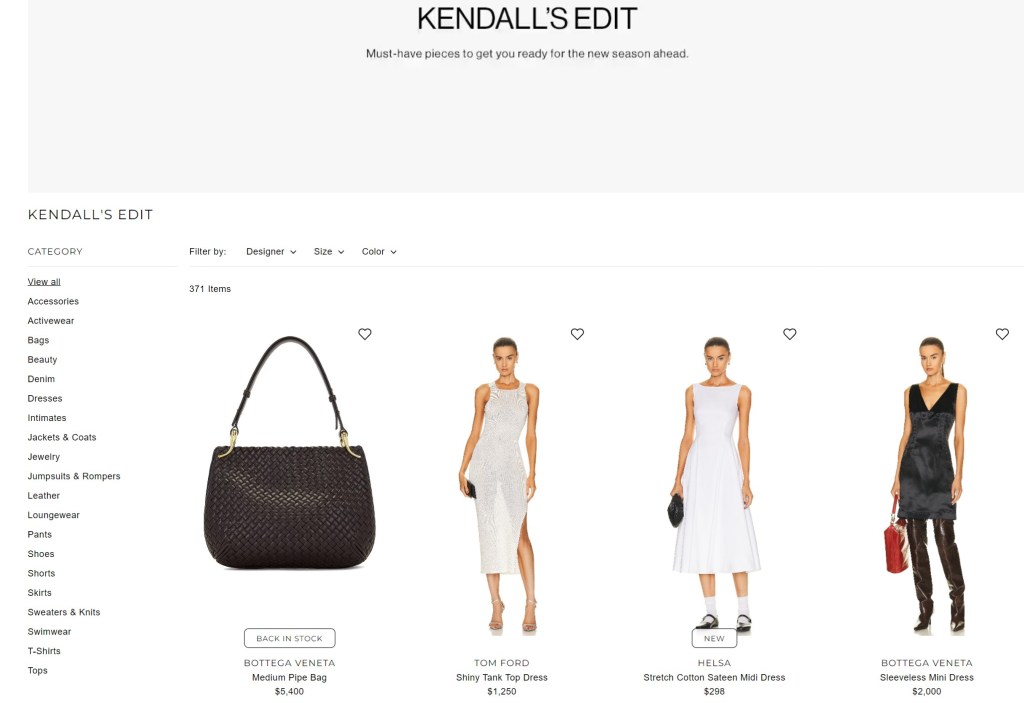
Revolve recently launched the world’s first AI-generated billboard campaign and invested heavily in the first AI Fashion Week, where the three winners’ collection is made and sold via Revolve or Forward.
I expect Revolve to be a big winner from Generative AI as they have already shown a commitment to growth and innovation. There will likely be a lot of big winners in this space if luxury fashion can profit from AI, but Revolve could be a big concentrated winner. They are investing in AI instead of other struggling retailers offering an unstainable 4% or higher dividend. Revolve doesn’t have the burden of underperforming retail stores, a bloated employee count, or archaic marketing initiatives. Revolve is currently a leader in a niche market, but AI can quickly turn that market much bigger in a shorter period. Think of a market cap 5-10 times bigger than it is now.
In the next three to five years, generative AI could add $150 billion, conservatively, and up to $275 billion to the apparel, fashion, and luxury sectors’ operating profits, according to McKinsey analysis. From codesigning to speeding content development processes, generative AI creates new space for creativity. It can input all forms of “unstructured” data—raw text, images, and video—and output new forms of media, ranging from fully-written scripts to 3-D designs and realistic virtual models for video campaigns. Generative AI has the potential to affect the entire fashion ecosystem. Fashion companies can use the technology to help create better-selling designs, reduce marketing costs, hyperpersonalize customer communications, and speed up processes. It may also reshape supply chain and logistics, store operations, and organization and support functions.
AI should make Revolve more efficient, creative, and, most importantly, more profitable. With luxury fashion, you hear a lot about a personalized experience, and that’s what Revolve provides: A curated boutique shopping experience for a demographic that primarily lives online. Sales are down, but the company is fortifying its brand by maintaining relevancy digitally and in real-life (sponsoring amfAR gala), continuing designer collaborations, and their investment in growth. AI will only improve Revolves ability to provide a super personalized experience to its customers.
As a proud shareholder of Nvidia since 2016 and a continued buyer of the stock in 2021 and January 2023, the results of the quarter one earnings call were phenomenal but not a surprise.
Nvidia guided for second-quarter revenue of $11 billion, plus or minus 2%; the chip maker has never before reported quarterly revenue higher than $8.29 billion, which it hit in the fiscal first quarter a year ago. Analysts on average were expecting $7.17 billion, according to FactSet, a gain from the $6.7 billion in sales Nvidia put up in the fiscal second quarter last year.
The experts expected Q2 revenue to guide $7.17 billion but now expect $11 billion. The numbers Nvidia reported are truly breathtaking but, once again, not surprising because, as shareholders of Nvidia know, the company is a powerhouse.
Nvidia is a fundamentally solid growth company. The media has covered this company’s who, what, where, when, and why in-depth over the past 7 years. Jim Cramer re-named his dog Nvidia in 2017. The CEO, Jensen Huang, was on the cover of Time Magazine in 2021. The stock isn’t some private investment that only a few insiders knew about.
The qualitative aspects of the company were terrific back 7 years ago. Understanding that Nvidia is equivalent to the Pat Mahomes of high-growth tech companies requires little due diligence. Buying the stock was a no-brainer, easy investment.
The fundamentals of Nvidia didn’t get worse; they have gotten better. What does change is sentiment, which is almost guaranteed to change dramatically. Negative sentiment is what helped drive the stock down to 108.13 in October.
Here is what investors can learn from Nvidia.
For most investors, you should buy and hold a stock like this. You don’t trade in and out of it, you don’t short it, you don’t use leverage. Just buy the stock and hold it.
It’s a simple strategy, but one many fail to actually execute. Of course, it’s painful during downturns, but it pays off without the stress of constantly getting in and out of the market.
The Power of Simplicity:
A grilled cheese sandwich is absolutely delicious, one of the most perfect yet straightforward things you can cook when made correctly. Too often, when I make a grilled cheese sandwich, the bread is cooked unevenly, and the cheese isn’t oozy enough.
Long-term investing is like a great grilled cheese sandwich. You buy and hold, simple as that. You hold during the tough times. You hold during the good times. Make it more complicated than that, and that’s where investing becomes stressful and more like a game of roulette. Your portfolio starts looking like burnt toast.
Investing isn’t a battle of intellect or having specialized knowledge. It’s mainly about being patient during euphoric and gloomy times. Let’s revisit Apple. Many investors had the vision to buy Apple stock. Many investors had the foresight to buy the stock when they were not the robust profit machine they are now. Those who made the most gains did not necessarily have a higher IQ or were great traders who got in at the right time; they bought the stock, sat on their hands, and held it for a long time.
The problem with investing is that perhaps our human nature makes us think we must be active in our portfolio. The paradox of investing, which does not apply to everyday life, is that more activity in your portfolio does not equate to better performance. Warren Buffett isn’t necessarily a more intelligent person than Carl Ichan or George Soros, yet his net worth is roughly nine times larger than Ichan and Soros combined! Buffett sat on stocks for decades, and Ichan, although still successful, took a different route that could have been more profitable.
The honest truth is that long-term fundamental investing is something most people universally agree is a solid strategy but never can do. Much like eating vegetables or exercising, the Warren Buffet strategy for most people is the best way to invest, but only a few people do it, which will likely remain the same in the future. The story is played out the same way every time. Investors who start consistently make bets that the market will crash, make ill-time short bets, or sit on the sidelines for an extended period underperform and lose money.
Many investors become fearful and panic, unable to hold stocks through even the whisper of a recession. In the stock market, you will also see a lot of arrogant investors who care more about their egos than making money. Both the scared and pretentious investors have the same problem: A lack of calm and patience when holding equities.
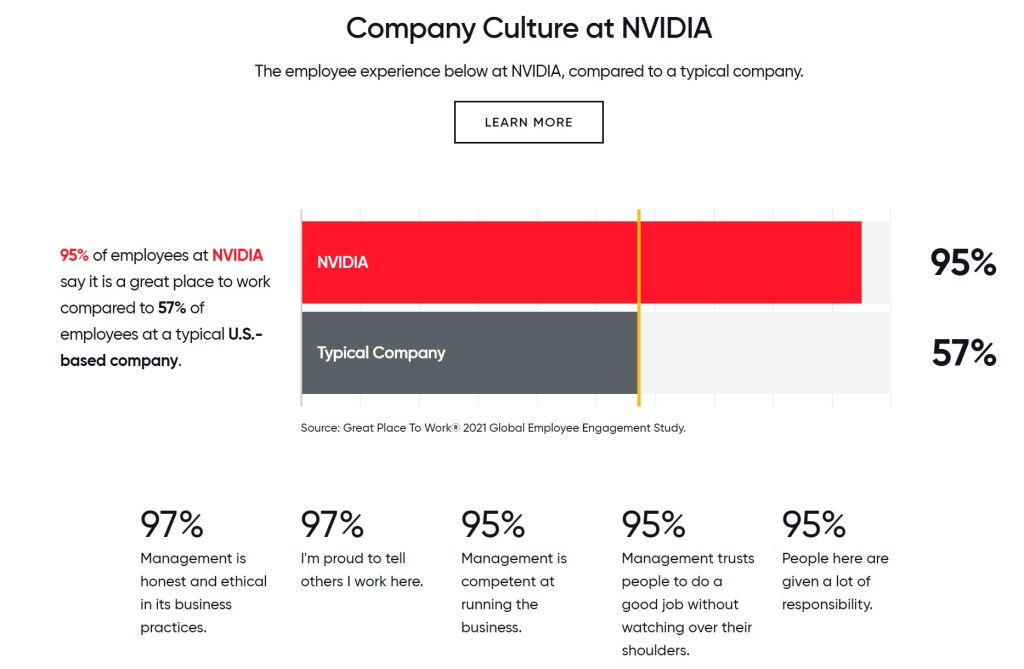
The buy-and-hold strategy lacks much sophistication and complexity, but….. it works. This strategy is the best and easiest way to capture the growth of Nvidia, a company with insanely high ratings on Glassdoor and a visionary CEO up there with Bill Gates and Jeff Bezos. Nvidia is about as perfect high-growth company you can find. Nearly unlimited demand, met by astronomical growth numbers. I will continue holding the stock like I have don
Vision to see great opportunities: Not being blinded by market timing or predicting a bear market.
Courage to buy into great opportunities: Be courageous, not fearful or arrogant.
Patience to hold them: The hardest and rarest of the three.
It takes vision, imagination, and a forward-looking lens into what a business can achieve and how big it can get. Don’t look at investing as a black box but as a reductionist art form. From ChatGPT: “Reductionist art refers to an artistic approach or style that emphasizes simplicity, minimalism, and the reduction of visual elements to their essential forms. It involves distilling or paring down the subject matter or visual elements to their most basic or fundamental components, often eliminating unnecessary details and complexities.”
Investors that can boil things down to the essentials and avoid the noise win.
While having difficulty finding an agent and getting rejected at more than 100 auditions, Leonardo DiCaprio grew increasingly disillusioned. At one point, he considered giving up his passion as the road to the big screen seemed a frustratingly long one. The agents wanted him to change his name to something slightly trendier, but Leo would not have it that way. His father encouraged him relentlessly by saying, “Go out there, son, and whatever you do, I don’t care if you’re successful or not, just have an interesting life,” a message which stayed with him.
Almost one-third of Americans have a net worth of zero or less.
Over half of Americans don’t know how to calculate their net worth.
Nearly one-in-four Americans aged 59 and above have yet to set for retirement.
That’s according to a new survey from Credit Karma.
This is a whole bunch of bad for many reasons. If you are 59 or older and have no nest egg, you needed a financial plan over 10 years ago. The sad reality for people in this precarious situation is dire and needs to be addressed asap.
You will likely need to continue working in your 60s and 70s to keep your head above water. Health probably becomes a significant factor. Many people will have to work until they die.
Healthcare and long-term care expenses are only affordable with a vast savings war chest.
You must rely on state and federal assistance without family covering your expenses. Anyone that has dealt with government-run-anything understands these options are subpar and inadequate.
State-run assisted living facilities are rampant with abuse and neglect.
There is no good way to spin this, and the government isn’t coming to the rescue. No politician or party will drastically overhaul the healthcare system, Social Security, or federal income taxes. Most people want roughly $1-3 million to retire easily and comfortably. A few $1,200 stimulus checks or wiping out $10,000 in student debt will not make a significant dent in reaching that goal.
I cannot provide a constructive message for people nearing retirement in their 50s and older. Things look bleak but are not hopeless. Righting the ship is still possible with quick action and the right resources. But I lack the personal experience in this subject to provide helpful advice on retiring without savings.
I want to warn those still decades from retirement: you have time but must show more urgency to achieve your financial goals. To retire comfortably, you must change your lifestyle and mindset about money.
Saving money and frugality does not create wealth. Investing does.
If you want to unlock wealth, you need to invest. Saving $5 a day by skipping Starbucks isn’t create wealth; what you do with that $5 and the other discretionary income will determine if you can build wealth.
Not buying luxury cars or designer clothes will provide you more savings and better odds of staying out of debt, but being frugal does not create wealth.
A lot of young people today are actually good at saving money. The problem is, where is that money going? Remember, many things you buy for $5-15 today will be $20-30 in the future. So, if you take that $5 from skipping Starbucks and stow it away in a savings account or something that cannot beat inflation, that $5 couldn’t even buy you one coffee in the future.
If you rush in to lock in your money in a 12-month CD with a 3-4% APY or a high-yield savings account yields upward of 4-5%, you are just losing less. As the great Harvey Spector said, “That’s the difference between you and me. You wanna lose small, I wanna win big.”
These vehicles won’t help you reach your retirement goals. If you put most of your money into CDs or savings accounts, you likely have too much of a scarcity mindset. Unless you have a salary of over $150,000, you shouldn’t be doing this because even Americans earning this type of salary aren’t pouring their discretionary income into inflation-losing vehicles.
Take smart risks, and think exponentially, not linearly.
If you make less or slightly above the median income, you cannot save your way into millions… It’s possible, but it would require a lot of sacrifice, luck, and time.
You are just an average person making around the median salary. How do you get ahead?
Get a part-time job, new job, or side hustle.
“A healthy person has a thousand wishes, a sick person just one.” – Tony Robbins.
Getting a part-time job or working overtime consistently can bring in more money; however, at what cost? Do you really want to work 50-80 hours a week? The cost of overworking will likely have a toll on your mental and physical health. The payoff needs to be huge if you are going to risk your health. But ask yourself again, is it worth sacrificing your long-term health and quality of life for a larger paycheck.
Job-hopping to increase your salary has worked for many people, but there is an obvious limit to this. You cannot expect a 10-20% yearly raise for the rest of your working life. At some point, there is a ceiling on the salary you can earn from a single job. This is a short-term strategy to build wealth.
Looking at a side hustle is a bright idea. How to turn passive income by committing a minimal amount of hours. The problem is you aren’t likely to get wealthy from it. A side hustle could replace a full-time income, but the odds are not in your favor.
Jasmine McCall makes $105,000 monthly in passive income for her Youtube Channel.
Could you be an outlier like Jasmine?
Wanting to be a social media influencer isn’t a bad idea. Trying to do it as a side hustle in addition to your primary source of income is low risk with a potential for a high return. The problem is the probabilities aren’t great. Building an audience requires a lot of legwork and patience. You’re first few years, you will likely only net a little. Remember, a lot of influencers that “made it” were highly accomplished in their professional careers. Many have a skillset and talent that allow them to succeed in social media.
The problem with the self-employed and those working a non-traditional career is that many end up working more hours than W2 employees and have the same wage or make less. They also have to pay more in taxes and insurance. Many of these workers have the same problem as those working a conventional job from an employer.
There is nothing wrong with wanting to pursue your dreams and passions. To be an outlier, you must embrace risk and failure. If one cannot tolerate failure, one likely won’t take the risk and experience growth.
Investing is the ultimate side hustle.
Investing is the best way to achieve wealth using a risk-reward ratio or looking at things based on probabilities vs. possibilities. Wealth from investing can grow exponentially, while the chances are not improbable.
A relatively small percentage of actors achieve financial security through acting. The same for high school athletes that want to go pro. Climbing the top of the corporate ladder and becoming a famous TikTok famous are things not in your statistical favor from happening.
My philosophy. You need to take risks if you want to get an enormous reward. That risk may have to be unconventional and out of your comfort zone. Most importantly, you have to risk losing a lot of your safety net to make a vertical move. That’s the cost of success: The loss of certainty for the potential of a bigger prize. But you need to take intelligent risks. Not just buying lottery tickets or praying and dreaming for a white knight to save you. Investing provides reasonable risk probabilities with enormous rewards, not just pie-in-the-sky hope and dreams.
Investing is the ultimate side hustle because it is accessible to anyone that can open a brokerage account. The barrier of entry is nearly nil. It is the ultimate weapon to build wealth, yet few take advantage of it for various reasons, which I have written about in the past.
A lot of people compare investing and gambling to the same thing, which is not categorically true:
Casinos are quite different from the stock market, where the chance of a positive return over a long period of time, say 10 years, is over 94%. Put another way, the chance of losing in the long term is just 6%, versus 100% with gambling. For every $100 put into the stock market, there is a 94% chance you will gain an additional $96 after 10 years (an annual return of 7%), and I am being conservative. Past performance indicates the annual return of U.S. Stocks has ranged from 9% to 14% over the past 10 to 30years.
The odds of making money in investing are incredibly high. The odds of making money in gambling are extremely low. The main difference is that investing is boring, while gambling is entertaining. Unfortunately, many people cannot differentiate investing from gambling, which explains why many do not invest anything at all, too conservatively or too recklessly.
The secret sauce with investing is that it can passively turn a small amount of money into a large windfall. It doesn’t require hours of editing videos or meeting with tenants. There are no maintenance fees, mortgage, or insurance needed.
The most important question any investor has to ask is, ‘What do you have to lose?’
Donald Trump asked this when he was appealing to black voters in 2016: “What do you have to lose by trying something new, like Trump?” he asked them. “You’re living in your poverty, your schools are no good, you have no jobs, 58% of your youth is unemployed, what the hell do you have to lose?”
If you are not investing, what do you have to lose? Turning a net worth of $50,000 to $5,000,000 requires risk. You can get this from compounded interest and just patiently waiting.
People generally have much more to gain than to lose. By the time people realize this, it’s too late. Investing long-term in your 50s and older is much more complicated than when you are younger.
I have seen this numerous times since when I was a financial advisor. A lot of people near retirement have a lot of financial regrets and missed opportunities. It wasn’t so much the bad investments but those never made when the opportunity was available. The window wasn’t short either, as people had decades to do something but let fear and complacency get in the way.
To tie this all together, the #1 trait for great investors, entrepreneurs, and really successful people, in general, is how people deal with adversity. If you can handle adversity, you can manage risk.
It doesn’t matter if it’s adversity created by the environment or adversity you create yourself. When you have a difficult situation, you need the mindset to take it and run with it. Some people just take it and make it work. They feed on adversity. Some people see trouble, and they just quit, as talented and intelligent as they are. It isn’t so much a game about IQ and intelligence but temperament.
There are some people who, in the face of adversity, become calmer. When the world is falling apart, their heart rate decreases for some reason. You will likely succeed in investing and life if you can be calm and opportunistic under adversity.
Cash is increasing, while debt and expenses remain low.
Annual bookings are rising with a limited amount spent on advertising/CapEx.
A Founder-led company that still has lofty goals.
The company has almost all the characteristics of a no-brainer stock you want.
My problem with Airbnb and the stock consists of two issues:
First, the stock became a public company in 2020. The explosive user growth happened before 2020, when the concept was new. The company is past its hypergrowth stage of the business cycle, and most of the good news about Airbnb is already priced into the stock.
It could have been an ideal investment if the company had gone public before 2016. The price would have been at a steal deal where the FUD of the business model would have created an ideal entry point to buy the stock. You could have reaped the rewards during the early stages of its growth phase. You ask most hosts and travelers today, and the golden era of Airbnb is over. It is now a mature company maximizing profits.
I still qualify Airbnb as a quality business, and if you invest in Airbnb today, you will likely see healthy returns in the long term.
Investment thesis: Invest in high-quality businesses and hold for the long term. Airbnb is a high-quality business with over 4 million hosts and 150 million users. They have the network effect, and management will find a way to monetize their growing ecosystem.
I have no problem buying Airbnb stock; the above thesis for holding the stock is acceptable. Again, the business model is great, and shareholders have good reason to keep the stock. I am highly skeptical that Airbnb can join Apple, Microsoft, Alphabet, Amazon, Tesla, and Meta, whose market capitalizations reached $1 trillion.
I have doubts Airbnb will kill the hotel industry and certainly not to the effect that Amazon disrupted retail. The hotel industry is doing quite well and is not likely to collapse. Short-term rentals (STRs) and experiences are also niche markets. How much juice is there left to squeeze? For example, global cloud computing has an expanding market valued at over $483 billion. The STR market size is worth $100 billion.
The STR market is oversaturated and full of potential landmines for investors in the form of local and state government regulation. Regulation won’t kill Airbnb, but it can slow its growth and zap its profits. How do you stop the network effect? Government interference. Ask Alibaba or Coinbase how government regulation can stall your growth.
Airbnb must diversify its profile and get into long-term rentals (LTRs). They need to attract corporate and student listings for those looking for leases of 3 months or longer. Daily rates work for STRs, but leases are ideal for LTRs.
The problem is the LTR online marketplace already exists and is crowded. Assume Airbnb takes all of Zillow’s market share; that’s only $10.42 billion.
Airbnb will likely consider acquiring a global home furnishing and cleaning service company, but does that make it a $1 trillion company? I don’t see it. For Airbnb to get to that size, they have to disrupt industries outside of their online marketplace, and I see this happening with a low level of certainty.
Airbnb needs more reward potential to be added to my portfolio. The risk is low-moderate, and the reward is moderate-high. I already have enough companies in my portfolio with similar profiles. Airbnb, by proxy, is connected with the housing and real estate market, sectors I want to avoid being invested in. At the right price, I would consider buying the stock, but I will pass for now. I don’t see the 10x potential.
Alphabet has roughly $113.76 billion in cash and $109.12 billion in total liabilities. The company is worth $365.26 billion, so it could pay off all its liabilities and still be worth over $246 billion.
That’s pretty insane.
The majority of big tech – Apple, Meta, Amazon, Microsoft, Nvidia, etc. have more liabilities than cash. That’s normal. That money is actively in use. A quality company uses its cash to build long-term value. When companies use debt and leverage it responsibly, they can provide more cash in the future for things like a dividend, share buybacks, or continuous reinvestments in the business.
Although this is not the worst thing in the world for Alphabet, it is a problem. The leadership at Alphabet needs to be more efficiently aggressive instead of calmly inactive.
Sitting on a ton of cash only works during a recession, and recessions don’t last forever. Other competitors are making bold moves, and although many will fail, those that succeed will be able to take away meaningful market share from Alpahabet’s core business if they remain stagnant.
Alphabets hoarding strategy reminds me of a talented doctor with a high income and a ton of savings but little investments. If that hefty salary keeps coming in, it works, but many doctors have impressive wages but so-so-accumulated wealth. A doctor with a high salary who produces just average investing results should have easily $10-20 million by the time they retire. The net worth of the average doctor is only around $1-5 million.
A doctor’s annual income tends to be 3-4 times the yearly income of the average American household, so a net worth of $1-5 million is just…. “meh.” Compare that with a teacher or plumber with a $1-5 million net worth.
Alphabet needs to be more active instead of just sitting on the revenue produced from its core businesses. Google Search is a continuous revenue stream, but any disruption could seriously cause a dent in the empire.
My message to Alphabet’s CEO Sundar Pichai: Stop with this scarcity mindset and beef up investments in the Other Bets division. The good news for Alphabet shareholders is that having a lot of cash is a problem but an easily fixable problem. It is not an existential crisis, at least not yet. I see this as a small roof leak requiring a patch-up. Alphabet still has a lot of data and a one-stop-shop digital ecosystem. Parking your money in Alphabet stock is safe, with a moderate amount of upside.
Pichai’s seat should be getting warmer. Alphabet needs to go on offense now. If not, their board of directors should strongly consider replacing Pichai with a more action-oriented war-time CEO. Alphabet has the soldiers, ammunition, and resources to win the AI race, but do they have the right leadership? Time will tell.
“Artificial Intelligence, Leonardo da Vinci drawing style,” an image NVIDIA’s creative team created using the Midjourney AI art tool.
I really like Nvidia. This company amazes me with what it can do. It blows my mind.
What many investors underestimate about Nvidia is its importance to technology. Nvidia is to technology what the fire hose is to a fire department.
Nvidia’s GPU tools are used as digital shovels for crypto miners.
Nvidia’s A100 chips are now the engines used to train ChatGPT and other generative AI.
With any new technological advancements or innovations come new markets and revenue drivers. Whoever the winner in the space is, Nvidia will be there. The players’ names and buzzwords may change, but Nvidia will be there.
Self-driving cars
The Metaverse
Autonomous robots
That’s why you cannot just look at a balance sheet and value Nvidia properly. Their growth potential is nearly limitless. The free cash flow for Nvidia can double in a year. Nvidia’s technology is powering the next big thing you cannot forecast.
The big secret about Nvidia is that it will always be overvalued at any price. You invest in a company like Nvidia for 2028 and beyond. The company and what drives its revenue will likely be drastically different in the future. As an investor, if you do not like roller coasters, there are calmer rides to get on. Nvidia is a high-quality technology company, but its sector is volatile. AI is fast-moving. You cannot map it out in a DCF model. You aren’t valuing Starbucks or Visa. Artificial Intelligence Computing isn’t slow-moving or predictable.
When the stock price falls, you give them the benefit of the doubt, like if Stephen Curry were to go on a long cold shooting streak. The bounce back is inevitable. I am not saying to go out and buy the stock right now, but when you invest in Nvidia, you are investing in a best-in-class company.
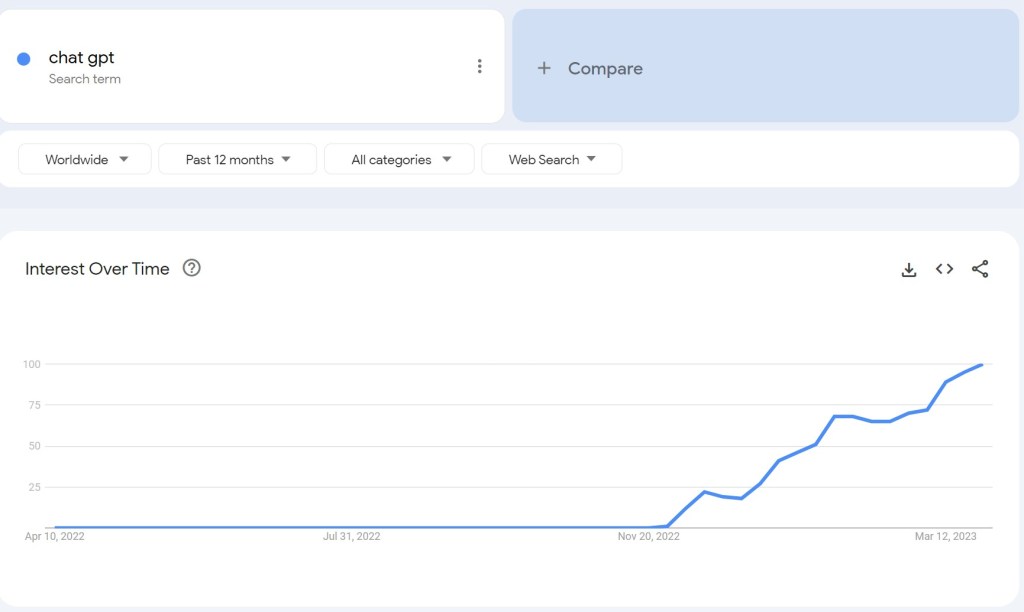
Interest in Chat GPT was not even on the mainstream media radar until December 2022.
Analysis of technological change requires imagination and the ability to quantify unknowable wonders. You will not find this in most financial market analyses. Just remember how often Chat GPT was discussed on Bloomberg or CNBC six months ago.
America will continue innovating based on four factors:
Moore’s law: the theory that the number of transistors you can fit on a microprocessor doubles every two years.
Koomey’s law: the theory that the energy efficiency in computing doubles every two years.
Kryder’s law: the theory that the amount of data you can fit in one inch of disk drive doubles every 13 months.
Shannon-Hartley theorem: As long as you can create channels with greater bandwidth, you can transmit information more clearly and faster. The more bandwidth, which is theoretically unlimited, the better.
Most of America’s tech industry revolves around these four rules. Eventually, when these wind-down, new advances will take place, driving innovation and efficiency further.
With Nvidia, I stress patience. The company was founded in 1993 and nearly went bankrupt in 1999. Owning the stock in the early 2000s may have felt like owning an overpriced gas-guzzling car.
But patience did pay for early investors. Owning $1,000 worth of Nvidia stock back then would be worth over $9,000,000 today. That’s why my investing philosophy consists of holding stocks for the long term and holding them for dear life. Long-term investing consists of holding stocks during bad times and when everyone says it is overvalued. This strategy awards patient laziness. The longer you hold, the bigger your reward.
The buy-and-hold strategy may lack intellectual sophistication, but it works. Wall Street tends to look only 14-28 months out. The average retail investor has an even shorter window. This short-view investing window will not net you 3,000% or more gains.
Salesforce iPod in 2004, and analysts said its P/E ratio was “too high.” The stock has increased more than 30 times in value since then.
People sold out of Google stock in 2009 because its valuation was “too rich.”
People sold out of Amazon in the 2000s because the stock was “too expensive.
If you want a company that optimizes growth, you look at Nvidia. Companies that favor growth are making riskier future bets that may or may not pay off, but when they do, and in a big way, they become the envy of Wall Street.
Lastly, I trust Nvidia because I trust Jensen Huang. As long as he is the CEO, I will hold the stock. Huang is an excellent CEO because he sells you on substance, not style and flash. Huang isn’t the best orator or salesman. He’s a hard-working guy who cares deeply for his company and employees.
Nivida is considered one of the best public companies in how they treat their employees, customers, and shareholders. Their employees are loyal, passionate, and dedicated. Huang preaches celebrating failure and intellectual honesty. Many tech companies take too little risk. You will be stuck in the mud if you fear taking risks. Many companies embrace risk, but many of those companies’ CEOS have a pie-in-the-sky mentality.
Jenseng demonstrates a great deal of emotional intelligence. He comes off as incredibly grounded yet relatable:
“I was a very good student and I was always focused and driven. But I was very introverted. I was incredibly shy. The one experience that pulled me out of my shell was waiting tables at Denny’s. I was horrified by the prospect of having to talk to people. You want customers to always be right, but customers can’t always be right. You have to find compromises for circumstances that are happening all the time and you have difficult situations. You have mistakes that you make; you have the mistakes that the kitchen makes. You can’t control the environment most of the time. And so you’re making the best of a state of chaos, which was a wonderful learning experience for me.“
A CEO like Huang is built for tough times. He understands how to navigate a company during turmoil and press the gas during a boom. I am confident he will lead Nvidia to a $1 trillion market cap as the growth story for Nvidia is still early. Buckle up and enjoy the ride up.
I listened to Raissa Gerona, the chief brand officer of Revolve, on the Glossy Podcast. I had never heard of the Glossy Podcast before, but it looks worth following on Spotify. Since Revolve is the biggest position in my portfolio, I would like to give my thoughts on Revolve before the Revolve Festival.
I recommend any shareholder of Revolve listen to the episode. It was very informative and gave a good primer on the state of the business.
Influencer marketing is still early.
Influencer marketing may seem oversaturated, but it’s still in its early stages and has doubled in size since 2019. The bigger the market grows, the better it is for the business and the stock. This type of marketing allows companies to engage with their customers on a personal level. User growth for Instagram and TikTok is expected to be steady for at least five years, so I don’t see any cause for concern about this form of advertising in the next decade.
“As someone who’s worked there for 11 years, it gives me peace of mind knowing that we have very senior leadership that understands the ebbs and flows of the business, and that’s gone through multiple recessions and obviously Covid — we’ve never experienced anything like this before. In 2019, we were doing $500 million in [annual] revenue, and then we just crossed $1 billion in revenue in 2022. “
The threat of TikTok being banned in the US is real, but Revolve has a strong presence on Instagram and YouTube shorts. If necessary, they have the team in place to pivot to where their customers spend most of their time.
The festival will have a fifteen-foot sunken UFO – whoa!
Looking at Revolve long-term, I see them opening up a flagship store in Los Angeles within the next five years. They should prioritize international expansion, Web3, and men’s wear. If a strategic acquisition target is available, they should pursue it more aggressively. 2023 is a good year to take on more obligations if it leads to meaningful future growth. Valuations for buyers are much more attractive than in the past few years.
Overall I see Revolve in a good position. They have a loyal customer base, and I see them capturing more female gen z clients, especially those born after 2000.
Free Cash Flow Problem?
Revolve’s Free Cash Flow influx mirrors that of Amazon. Revenue was up for these companies, and free cash flow was down.
Free cash flow is the cash from operations minus capital expenditures. Although free cash flow was down due to increased CapEx, these investments in brand marketing and fulfillment centers will produce a positive ROI. Forgoing profits for growth and expansion is a winning strategy in the long term. I would rather see a company invest than sit on cash. When the economy improves and demand returns, those investments will likely pay off and be reflected in the balance sheet.
Stock price vs. Intrinsic value.
The stock price of Revolve is publically available for anyone to view. The intrinsic value of Revolve is subjective, based on qualitative and quantitative factors of the business. I always go back to the great quote from Benjamin Graham: In the short run, the stock market is a voting machine, in the long term, it’s a weighing machine. This means that in the short term, the stock price may be influenced by sentiment, news, and market trends, but in the long term, the stock price will reflect the true value of the business.
Many investors, even good ones, make the mistake of following the stock price and letting the price movement dictate their thinking on how the business is doing. Like other e-commerce platforms, Revolve is currently mispriced and undervalued. Growth companies, particularly in e-commerce, are often grossly overvalued or undervalued based on future free cash flow.
Netflix’s stock price hovered around 175 in the summer. In March, it was trading at over 345.
Meta’s stock price hovered around 90 in November. In March, it was trading at over 200.
Nvidia’s stock price hovered around 145 in December. In March, it was trading at over 275.
Based on the stock price falling dramatically last year, you would think these three companies were distressed. It is hard to believe the intrinsic value of these three large companies changed that much in a few months.
The stock price dictates public sentiment, but the intrinsic value can take a while to metastasize and reflect for shareholders. It would help to ignore the noise because most stock analyses and commentary you see daily do not matter.
How I view investing:
The intrinsic value of Revolve is worth at least 100. Will that be reflected in the stock price? It will likely happen before 2030. Thus, I have never sold any positions I have accumulated over the past four years. That’s the bet I am making.
I can live with the stock price going to zero (unlikely). That’s the risk of investing. The good news is that is the worst-case scenario, or is it? What’s worse, buying a stock and watching your investment go to zero or buying a stock, doing the research, having the conviction, but selling too early and watching the stock generate 100x or more returns. The latter scenario for me is the worst-case scenario. Ask investors who held Amazon in the 2000s but sold because the stock was “too expensive” or those that sold Google in 2008 because the P/E ratio was “too high.”
Investors will make a lot of mistakes. People make a lot of mistakes in their life. 99.9% of them, you can recover from them. With a losing investment comes a lesson to learn. The biggest tragedy in investing comes from missing out on gains in something you believed in but didn’t have the patience in to reap the rewards. That would be a deep regret of mine.
Great investors will fail. With great success comes failure.
LeBron James has been to the NBA Finals 10 times. Six of those times, his team lost.
Tom Brady has been to the Super Bowl 10 times. Three of those times, his team lost twice to Eli Manning and once to Nick Foles!
Aaron Judge hit 62 home runs in 2022 and struck out 175 times that season.
Success comes with failure, but if you succeed enough times, those failures don’t become deep lifetime regrets. That’s why I am not a big fan of index investing. Index investing still carries risk but produces muted gains. The entire mantra of index investing is that active investing is too hard or unpredictable, so you shouldn’t try. I’m afraid I disagree with that philosophy; it would be like saying dieting is too hard, so you should take diet pills or supplements instead of trying to eat healthily.
I expect Revolve to be a big-time winning investment. I bypassed other lucrative opportunities like adding to my Amazon position or starting a new position in Lululemon and Louis Vuitton. Will it pay off?
Based on my research, I believe Revolve has a solid competitive position in the fashion industry and strong growth potential. Their focus on influencer marketing and customer engagement through social media has been successful and will likely continue to drive growth. Revolve is a good investment opportunity for those interested in the fashion industry and the potential growth of influencer marketing. While the stock price may fluctuate in the short term, I am optimistic about the company’s long-term prospects and see them as a strong player in the industry.
2020 and 2021, due to mainly the pandemic, were not standard years and must be considered anomalies. Those numbers might be a glimpse into the long-term future but not something you can expect in the next few years. 2022 although a lousy year with rising interest rates and the Ukraine conflict, should be considered a typical business year.
For a company like Revolve, compare their numbers from 2022 to 2019 instead of the last two years. 2022 was a bad year for the economy, whereas 2019 was a good year. If the crucial numbers like revenue, sales, active customers, and average order value in 2022 are better than in 2019, that’s a strong sign the company is doing well. If the opposite is true, that could be a sign the company is going in the wrong direction.
That’s how I look at growth companies. Revolve for 2022 had almost doubled the number of active customers, total orders placed, and net sales from where they were in 2019. With nearly twice the number of orders, the average order value has increased, a sign of a strong brand.
Bottom line: The 2022 numbers for Revolve are above the 2019 trendline.
Not everything is rosy. Some of the numbers are pretty bad. Macroeconomic issues hurt Revolve as they are not immune to inflation or rising gas prices.
When prices increase, consumers decrease their spending on non-essential items like apparel. There is no question Revolve will suffer, but I predict it will weather the storm of an economic slowdown better than its competitors. Before the pandemic, companies like Nordstrom, Macy’s, and H&M struggled. These high-end department stores have a laundry list of problems. Take Nordstrom, for example. They offer nearly a 4% annual dividend yield, which siphons funds to shareholders. This only makes sense if the business is healthy. This type of dividend for a struggling business is the equivalent of an unhealthy person donating blood. The old guard has a bunch of debt, stores, and employees. Revolve has none of these financial obligations, where its profits go straight towards fortifying its brand and investing in its logistics.
Strong Brand leads to Customer Loyalty + Consistent demand/Profitability
Revolve has Pricing Power. With PP, you can sell items at full price but avoid any long-term inventory glut
Revolve will emerge as a big-time winner and an industry leader when the economy improves. Like a high-end jewelry brand, Revolve will have consistent profitability, pricing power, and margins. The stock will be a hero based on the brand alone. If they continue to improve their digital infrastructure, it will allow them to create a deeper connection with their loyal customers and eventually create a cost advantage. If Revolve can replicate the Nike playbook, the stock will 10x relatively quickly. The stock remains a solid long-term hold.