
“The only way to win in a casino is to own one… unless you’re very lucky.”
— Steve Wynn, in a candid chat with Charlie Rose
“Even when people are lucky, they usually gamble away their winnings.”
— Charlie Rose, pressing the point
“You know nobody who, over time, comes out ahead?”
“Nope.”
— Steve Wynn, unapologetically blunt
Charlie Rose Interviewing Steve Wynn – Transcript
Over the past two years, I have spent a lot of my free time gambling at the casino. I would experience the full buffett of offerings – blackjack tables, baccarat bets, craps rolls, roulette spins, sports wagers, and slot machines. The time spent on gambling has distracted me from more important activities like investment research. Overall, the experience was a slow bleed (surprise) on my wallet and created more negative expected value than any entertainment benefit I may have received. The silver lining is that I could reflect on this experience and re-examine my behavior with a more sharpened perspective, returning to my disciplined and patient approach to investing.
The Dopamine Trap: Chasing the High
I started gambling just to try it out. I was bored one night and willing to try something new. I had gambled once on a slot machine in my 20s. From starting this “hobby,” I could feel the anticipation build up, even driving to the casino. I knew from the start there was an issue because I sometimes would become irritated being stuck in traffic. I couldn’t get there fast enough. That’s the dopamine kicking in, which had always been highest before I gambled.
The reason I enjoy gambling is the exact reason I hate it: the allure of unpredictable outcomes, which causes a jerk in your emotions like a yo-yo.
- I made my first sports bet on the Falcons vs. the Commanders and watched the game like a kid, living on every play. The game concluded in overtime, and I lost $700.
- Betting over $100 on a single hand of blackjack.
- Making over $1,000 in less than 15 minutues of craps.
- Losing over $500 on a single roll of the dice in craps.
- Losing over $1,000 in 7 minutes on a slot machine.
- Winning it all back and more on a single $3 slot machine bet.
Even for a level-headed guy, this rollercoaster was dizzying. I chased losses for hours, blew past my budget, and felt the sting of regret more often than the thrill of victory.
The Mirage of “Getting Rich”
All gamblers want to make money. Unfortunately, gambling in the long run will likely lead you to lose money. A non-gambler (net return of zero) will beat 95% of the returns of all gamblers.
The reason most gamblers lose can be summed up very simply: The odds of losing money are much higher than the odds of making money. Even though slight, the mathematical advantage (house edge or vig) is likely insurmountable in the long run. Imagine the Los Angeles Lakers having to play all their games on the road, or the New York Yankees only allowed to carry a 24-man roster.
From a pure risk-reward perspective, every bet either carries too much risk that does not justify the reward like high coverage roulette strategies or the iron cross method in craps. Or the handful of wins does not overcompensate for the avalanche of losses you get from picking a few numbers on roulette or continuously grinding on a slot machine.
When I accepted that I was unable to beat the casino, gambling became much less appealing. Even with short-term variance and playing “smarter,” I finally admitted to myself that gambling is an inefficient way to make extra income and an even more unrealistic way to build wealth.
That’s why I chuckled when I heard a fellow gambler say, “I need to make smarter bets.” The reality is that “gambling smartly” or “responsible gambling” is an oxymoron. No matter how “smart” you play, the casino is built to outlast you.
When gamblers say this, they typically mean either making smaller bets or not going “full tilt.”
Whether you are betting in smaller increments or just a few large bets, the odds remain stacked against you. Betting with a smaller budget just means you are losing money less quickly. In the long run, the results will likely produce a negative return.
Naivety and Immaturity:
Some of you may be wondering how I can be so ignorant as to think I could prosper from gambling. I have made the “smart” decision to invest in Nvidia and Palantir early and continue to hold long-term. How could I be so gullible?
- The casino often offers free food, play, gifts, and comped rooms to give the impression that you are winning. Many five-star resorts, like the Wynn or Venetian, provide a flawless, impeccable, best-in-class guest experience.
- Winning several jackpots (over $1,200 on a single win) on slot machines has distorted my analytical thinking, providing a false sense of confidence in games where you have zero control based on random events.
- I vastly underestimated how the casino environment clouded my discipline and made me more comfortable taking unnecessary risks.
- Going to the casino was not purely motivated by financial gain but by the dopamine hits and escapism.
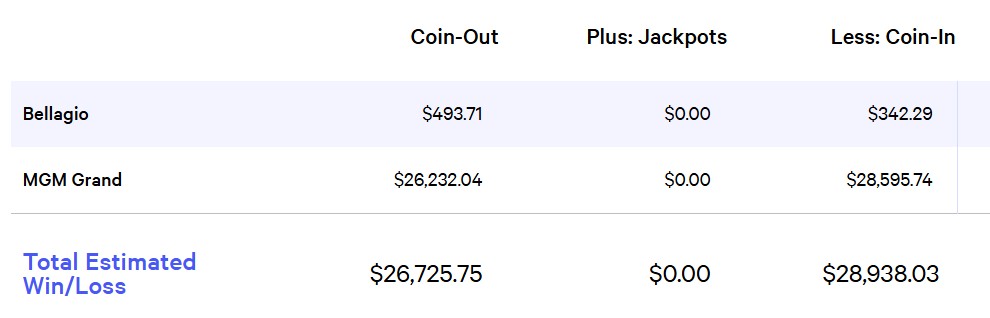
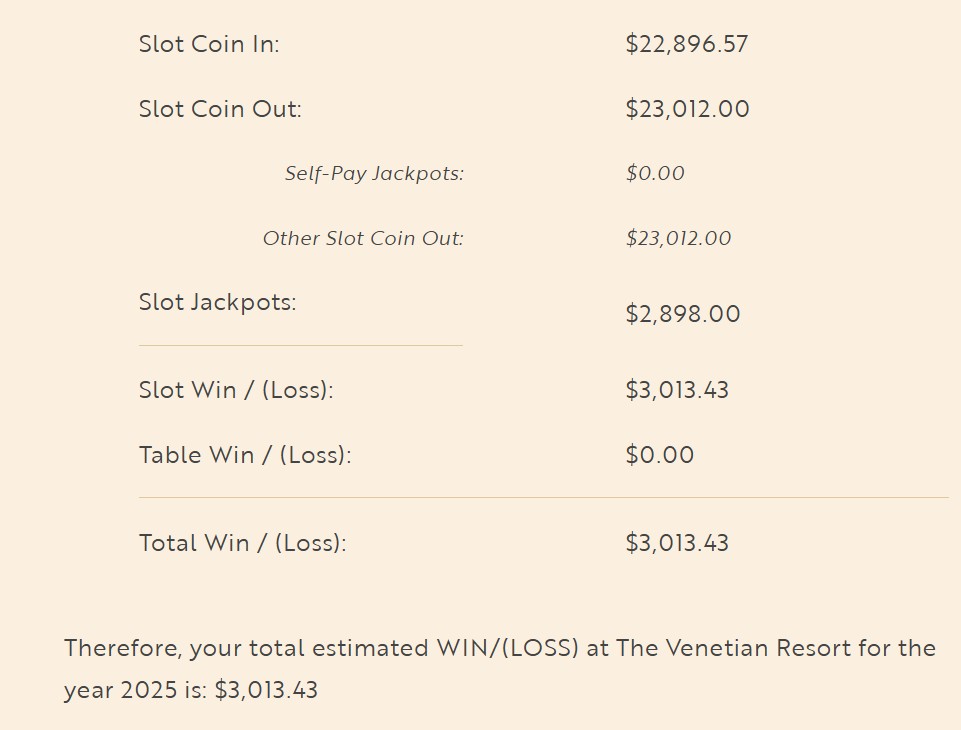
It wasn’t just about money. I was chasing dopamine hits and an escape from reality. Tying my checking account to sparkly animations or a dice roll feels absurd. My Las Vegas coin-in/coin-out statement? Humiliating. My local casino doesn’t even provide a detailed win/loss record, which only adds to the haze.
Reflection and Moving Forward
I am a super competitive person. Playing games where the advantage is not in my favor seems unwise. It is even sillier to build wealth based on sparkly animations on a screen or a random roll of the dice.
Since diving into gambling, I’ve lost about $5,000. To some, that’s pocket change; to pro gamblers, it’s amateur hour. My investment portfolio sees bigger swings daily. But here’s the potential impact: if I’d put that $5,000 in the S&P 500 five years ago, it’d be worth over $10,000 today. In Nvidia? Try $85,000. Instead, I’m down $5,000, with nothing but fleeting thrills and a gambling hangover to show for it—those mornings after a big loss when I’d rather call in sick from work than face the day.
Do I have a gambling problem?
My Problem Gambling Severity Index score of 6 flags me as moderate risk—not an addict, but not out of the woods. I’ve never touched debt or my investments to fund bets, and I trust my mental resilience to keep me grounded. Will I quit for good? Honestly, I’m not sure. Gambling has some entertainment value, but often feels like a second job. I’m too competitive to play without obsessing about how much I am up or down.
Investing vs Gambling: Two Different Games
Since gambling is a game of chance, you will often get variable outcomes. I have chased losses (not advisable) and won jackpots. I have doubled down on hands, risking my entire bankroll, and beat the dealer.
Could a hyper-disciplined “Rain Man” gambler break even or profit? Sure, it’s possible. But probable? No. And even if you’re that rare winner, is it worth the grind? There’s a smoother path: open your brokerage account, buy an index fund or a solid stock, and let time do the heavy lifting.
The casino’s relationship with you is a one-way street—it wants your money, not your success. No amount of complimentary cocktails or VIP perks changes that. For the broke, it’s a poverty trap. For the rich, it’s a slow drain. For everyone, it’s a time suck. Investing, though? It’s the greatest show on earth. Analysis and patience build wealth with the odds in your favor. It’s not as sexy as a jackpot but rooted in real economic value, not chance.
Be the Casino, Not the Gambler
“Well, it requires patience — which a lot of people don’t have. People would much rather be promised that they’re going to win [on] a lottery ticket next week than that they’re going to get rich slowly. Gus Levy used to say that he was long-term greedy, not short-term greedy. If you’re short-term greedy, you probably won’t get a very good long-term result.”
— Warren Buffett, preaching the gospel of patience
Early in life, I learned that investing is the true superpower in building wealth. For long-term investors, you have the house edge.
There are three main advantages investing has over gambling:
- Control over risk: You choose your investments and manage exposure.
- Purpose: You’re building wealth, not chasing chance.
- Positive expected returns: Over time, markets trend up.
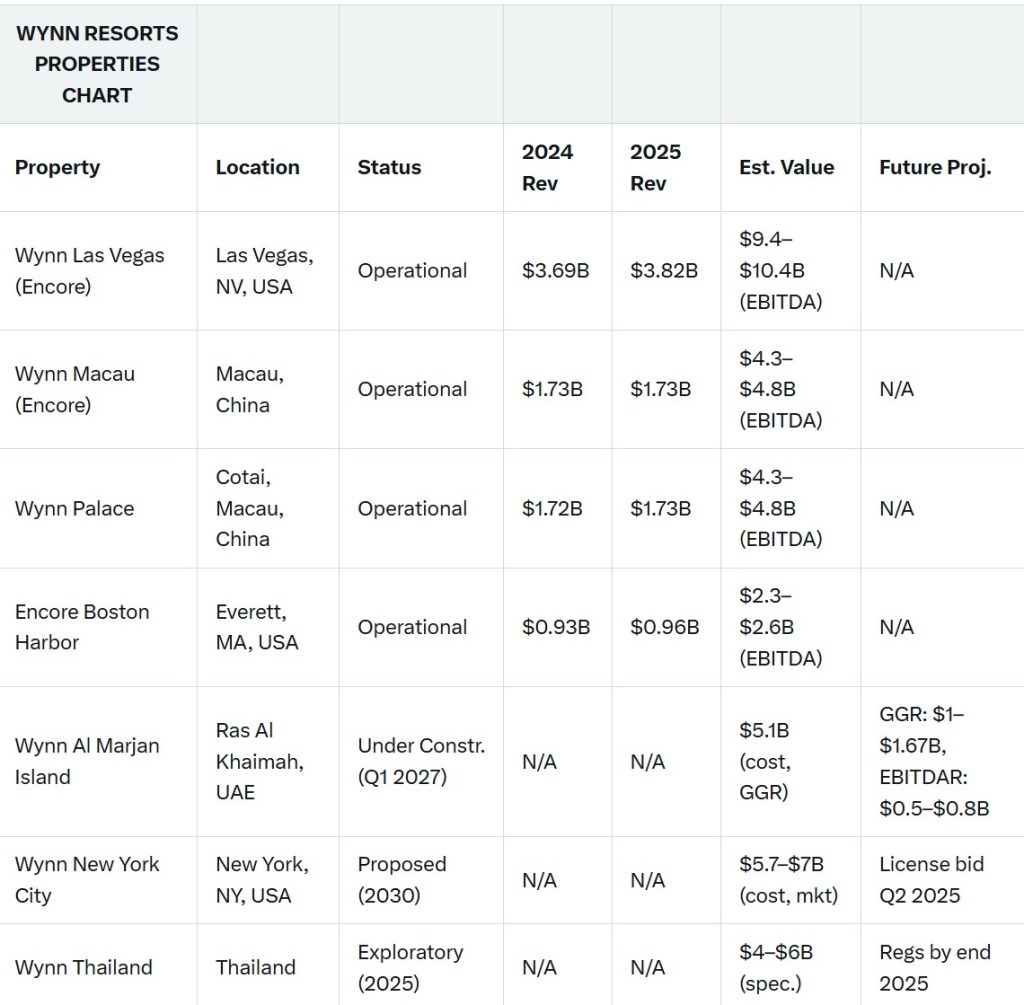
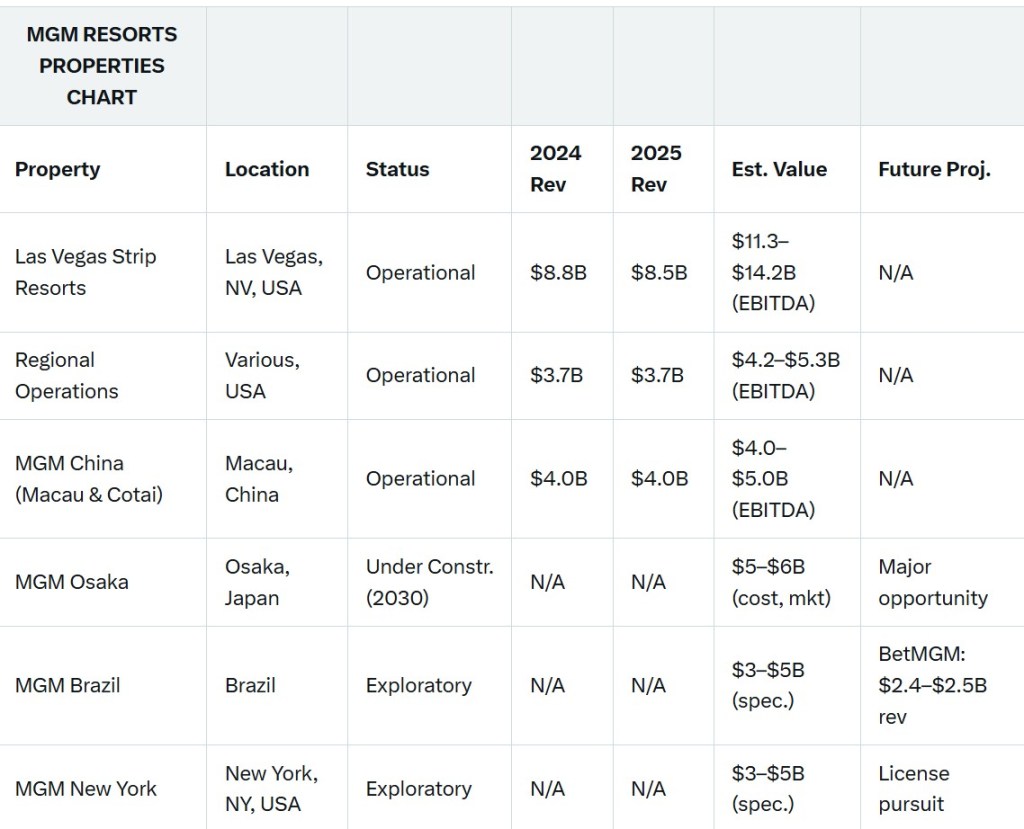
No poker pro has built a billion-dollar fortune from cards alone. Nevada’s richest? Miriam Adelson is worth $28 billion thanks to owning casinos. Want to win like the house? Invest in it. Stocks like MGM Resorts or Wynn Resorts let you own a piece of the action.
MGM Resorts International also presents a potential bargain. Its properties are valued at over $38B, exceeding its $8.77B market cap, suggesting the stock is also undervalued. Its steady share buybacks and Las Vegas focus make it a safer bet. If MGM Osaka is a major success, its business can find a new avenue for growth and become less reliant on Las Vegas tourists.
Wynn, with a market cap between $7.16B and $10.29B, carries more risk—negative equity and a high debt-to-equity ratio—but its premier luxury brand and global expansion (like Wynn Al Marjan Island in the UAE) offer serious growth potential. Wynn’s rooms cost 20-50% more than MGM’s, and the “wow factor” is unmatched. The sum of its current property values over $20B significantly exceeds its market cap, suggesting the market may not fully price Wynn’s assets.
Both are cyclical and tied to the global economy, but gambling’s demand is insatiable. With new markets opening in the UAE and Japan, casinos like MGM Osaka could spark a Vegas-style boom.
Forget scrolling through TikTok gambling influencers or waiting in line for electronic roulette. Spend a few hours researching. Investing in the house—not betting against it—is how you build real wealth. My casino days taught me a hard lesson: chasing quick wins is a sucker’s game. Let time and strategy tilt the odds in your favor.
The secret isn’t so much a secret. As Warren Buffett noted, short-term greed is unlikely to produce good long-term results. I was being short-term foolish, and fortunately, the damage is repairable. I will revert to being patiently long-term greedy.
 Invest in Myself