Lemonade’s Moment of Truth: From Speculation to Generational Play

The Mainstream Blind Spot

Most investors are still fixated on the smoking crater of the 2022 bubble. They haven’t refreshed their mental models to reflect Lemonade’s evolution from a cash-burning startup to a data-driven compounding machine. That lingering skepticism? It’s pure alpha.

The Pivot to Profitability

Lemonade has long been a tantalizing story, but the big “if” was always profitability. Now we’re witnessing the “how.” The narrative has flipped from raw growth to ruthless operational efficiency. Key highlights from Q3 2025:

  • In-Force Premium (IFP): Reached $1.16 billion, up 30% YoY—their 8th straight quarter of accelerating growth.
  • Loss Ratio Mastery: Gross loss ratios have plummeted from 73% down to 62%. In insurance, that 11-point swing is the difference between a straw house and a fortress.
  • Efficiency at Scale: Loss Adjustment Expense (LAE) ratio—the cost to process claims—dropped to 7%, below legacy players like Progressive or Geico (typically 9-10%).
  • Reinsurance Revolution: Primary quota share ceded fell from 55% to 20%. Lemonade’s finally retaining the “juice” instead of outsourcing most profits to reinsurers.

The Coiled Spring: The Tesla Shot of Adrenalin

A coiled spring demands a spark. Enter the Autonomous Car Insurance launch: Arizona on January 26, 2026, and Oregon in February. By plugging directly into Tesla’s Fleet API, Lemonade delivers ~50% per-mile discounts with Full Self-Driving (FSD). This isn’t just insurance; it becomes a viral customer magnet.

  • The “X” Factor: Tesla influencers’ publicity and Elon Musk’s orbit have generated millions of organic impressions. In a world where a Super Bowl ad costs $7 million for 30 seconds, Lemonade effectively ran a “digital Super Bowl campaign” for free.
  • The Safety Edge: Lemonade’s data shows FSD-assisted driving is roughly 2x safer than human driving. They are pricing risk with high-resolution telemetry that traditional insurers simply can’t touch.

The 10x Revenue Multiplier

The hidden gem? Premium per Customer is now $403 (up 5% YoY). As the “Lemonade generation” matures from $15/month renters to $150/month car/pet/home bundles, revenue per user could 10x while acquisition costs hold steady. It’s the flywheel legacy insurers envy.

The Bottom Line

I am extremely bullish. This isn’t the same as buying the hype at 70 in 2020. Over 5 years later, the company is dramatically more efficient, and “Car” is a proven engine rather than a theoretical startup.

The Lemonade thesis was never about a sleeker app; it was about a fundamentally superior information architecture. While the legacy giants like State Farm or Geico price based on broad ‘buckets,’ Lemonade is finally proving it can price at the individual level.

With the stock retracing under 70 (currently hovering around $63–$64 after a volatile start to the year), we may be in the final throes of disbelief. Q4 2025 Earnings Call on Feb 19th is just days away. The data is trending toward a triple-threat: accelerating growth, massive margin expansion, and a clear path to profitability. With the recent winter storms being less catastrophic than feared, the pathway for Lemonade to run in 2026 and 2027 is wide open.
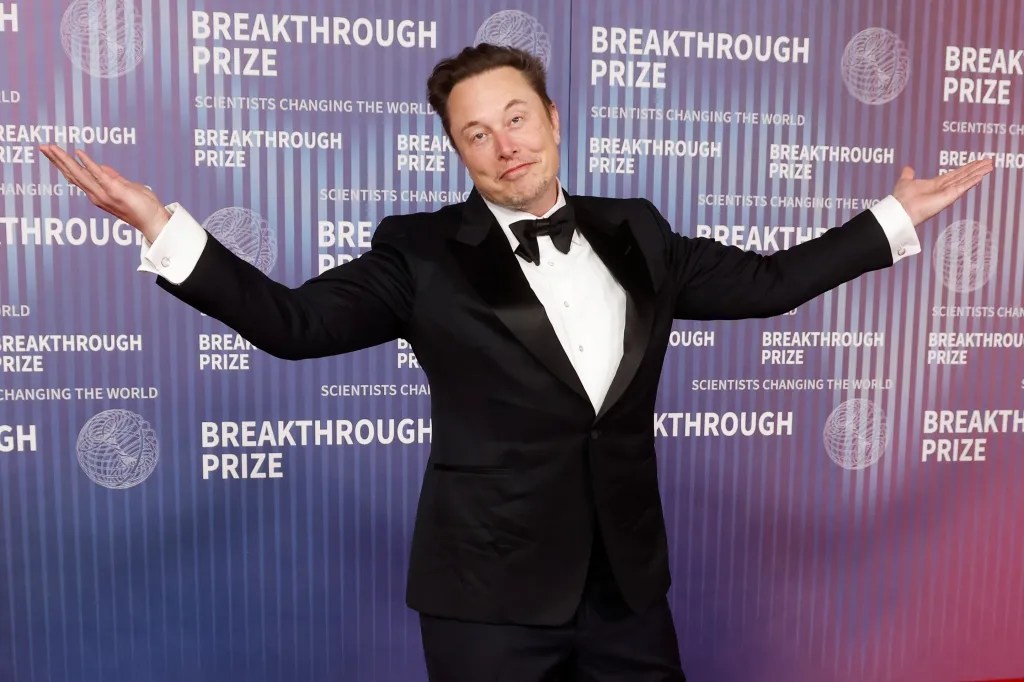
Voting for Elon to Save Tesla’s Soul

Why Tesla Shareholders should emphatically vote to approve Musk’s $56 Billion pay package

Musk’s compensation isn’t just about dollars; it’s about shaping Tesla’s destiny and soul. As shareholders, we are not just passive observers but active participants in this journey. Our votes on his pay package are a direct reflection of our belief in his vision and our commitment to Tesla’s future.

Under Musk’s guidance, Tesla’s stock price has skyrocketed, defying recent market turbulence. This dramatic rise starkly contrasts the stock’s value in 2018, which was a mere $21. Long-term shareholders have reaped substantial financial gains from this growth, a clear testament to Musk’s undeniable influence. This is not a personal viewpoint but an impartial, nonpartisan, indisputable reality.

Musk’s strategic decision-making has been a driving force behind Tesla’s success. Against all odds, he has led the charge in electric vehicle and clean energy innovation, reshaping entire industries. His ongoing leadership is not just important; it’s crucial for maintaining Tesla’s competitive edge and ensuring a prosperous future for the company. The potential loss of his leadership should inspire every shareholder to vote in favor of his compensation package.

Tesla’s long-term vision hinges on visionary guidance. Voting on compensation reflects shareholders’ trust in Musk’s ability to steer the company toward its goals. Elon’s compensation package is entirely contingent on achieving ambitious targets. If Tesla fails to meet specific triggers, Musk receives no compensation. This ensures that his pay is directly linked to the company’s success, aligning his interests with the shareholders. This alignment of interests should foster trust and confidence in every shareholder.

Tesla shareholders should ask themselves why they invested in the company in the first place. How many cars they sell this quarter or next quarter is less important than how they are positioning themselves for a Robotaxi world. This is an AI and Robotics company. Shareholders who dislike Musk or want to invest in a typical car company that achieves predictable quarterly numbers can choose from a bevy of other publicly traded companies.

Actual long-term Tesla shareholders don’t see Tesla as a car company; they see it as a venture with a start-up mindset into sustainable energy, AI, and software development. At heart, the vision is greater than just manufacturing vehicles. There is a clear line in the sand. Do you want Tesla to attempt to achieve moonshot or be a mediocre car company run by a Wall Street figurehead chasing predictable quarterly numbers?

If you vote no, you clearly communicate that you do not want Elon running Tesla. It’s a big middle finger to spite someone when the sentiment and stock price are low. Accelerate the transition to sustainable energy, revolutionize transportation, and produce humanoid robots at scale vs. grabbing low-hanging fruit and achieving goals with lower-moderate upside?

The rhetoric being spewed by pundits is biased, carrying a political agenda. Elon Musk’s loudest and most vocal critics are likely not Tesla shareholders, meaning they have no skin in the game. Think about it. Why would you “invest” in a company with a CEO you find deplorable? Does that make sense?

A story about business and technology has been hijacked by partisan fundamentalists. This rabid audience is tribal and less open to listening to opposing views. Elon Musk has been tagged as a villain that commentators will continue to deride. They have used the recent downturn in the stock as ammunition to defend their ideology.

Attacking Elon Musk has become a proxy for attacking President Trump. It’s that simple. These pundits are not your friends and are far from advocates of unbiased investment advice. Tesla stock could 100x and produce more than 200 million all-electric cars in a year; Elon Musk is still a con man to them, and the company is still a bad investment. Facts, data, and performance don’t change a fundamentalist’s opinion. It also won’t get them to admit they are wrong. The goal is to see Elon and Tesla fail spectacularly. Ask yourself if their interests align with yours as a shareholder.

I have voted yes because Elon’s pay compensation is necessary and mission-critical to Tesla’s future growth. Not voting for this package could potentially have catastrophic consequences. Losing his leadership would be a setback for Tesla and the future of our society as a whole. Musk is a man on a mission, and we as a society are in debt for his projects, which are critical to improving humanity through Tesla, SpaceX, Neuralink, The Boring Company, X, and xAI.

Elon Musk has revolutionized the electric car industry and taken on unimaginable financial and reputational risks. His sacrifices and suffering paved the way for Tesla’s success, allowing shareholders to thrive. This pay package is a testament to his past performance and a powerful incentive for future success. I voted yes because it keeps the trailblazer in place and re-positions Tesla into propelled growth for the next decade.