Senator Karen Strikes Again

Elon Musk: “You remind me of when I was a kid and my friend’s angry Mom would just randomly yell at everyone for no reason.”

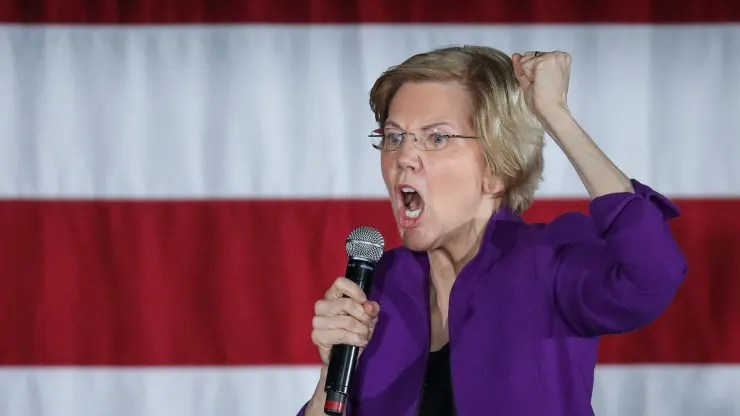
Senator Elizabeth Warren, aka “Senator Karen,” is at it again. The Senator from Massachusetts is leading a group of her colleagues trying to block Amazon’s $1.7 billion acquisition of iRobot.

She sent the Federal Trade Commission a letter stating: “We urge the FTC to oppose the proposed Amazon – iRobot acquisition. Amazon’s anticompetitive practices stifle innovation and harm consumers, workers, small businesses, and the economy as a whole. The FTC should use its authority under the Clayton Act to prevent the company from further violating our competition laws.”

I find this type of language and posturing from the likes of Senator Karen eerily similar to the actions of the Chinese Communist Party and their regulation against Tencent and Alibaba.

Will the FTC attempt to block every acquisition attempt made by Amazon, Google, and Meta? It seems that way. The Chair of the FTC is Lina Khan. When Khan was a Yale Law Student, The Yale Law Journal published her article, “Amazon’s Antitrust Paradox.” How is Khan supposed to be impartial in evaluating antitrust law with anything regarding Amazon?

Amazon is a profitable company. Many founders build startup companies to get acquired by companies like Amazon. Not all founders of startup companies want to continue competing and potentially get wiped out by their competitors. Many want to cash out on a lifetime of hard work instead of heading a publically traded company. Do you think Brynn Putnam regrets selling her connected fitness company, Mirror for $500 Million to Lululemon? Does Jamie Siminoff have a lifetime of regret selling Ring to Amazon for over $1.2 billion? Many of these startups can use their parent company’s resources and expertise to reach more users when they become subsidiaries. Most importantly, they don’t have to deal with the likes of Senator Karen or Lina Khan trying to regulate their companies to death.

Both Warren and Khan act on ideology and politics. Earlier this year, the FTC sued Meta to stop them from buying Within Unlimited, a small startup virtual reality fitness company. Khan did so against the advisory of her staff, which recommended the FTC not sue Meta.

This crusade against Big Tech is all about gaining power and influence. Companies that became too profitable, and now the government wants to intervene. Remember when Warren ran for President, she was clamoring to break up Amazon, Google, and Facebook but at the same time gladly took their donations.

From an investment standpoint, I see the government meddling in every acquisition as a bad result for everyone. Based on Warren and Khan’s vision, they want to break up these companies and turn Big Tech into the airline industry – A bunch of barely profitable companies with no differentiating advantage and subservient to the government. If the government continues to regulate Big Tech, they will eventually have to bail them out just like they did with airlines, the auto industry, and banks.

I am reminded of Chapter 3 of Zero to One: All Happy Companies Are Different:

U.S. airline companies serve millions of passengers and create hundreds of billions of dollars of value each year. But in 2012, when the average airfare each way was $178, the airlines made only 37 cents per passenger trip. Compare them to Google, which creates less value but captures far more. Google brought in $50 billion in 2012 (versus $160 billion for the airlines), but it kept 21% of those revenues as profits—more than 100 times the airline industry’s profit margin that year. Google makes so much money that it’s now worth three times more than every U.S. airline combined.

Is the goal to turn Amazon into United Airlines? I hope not.

Where I would invest $1,000,000 Today

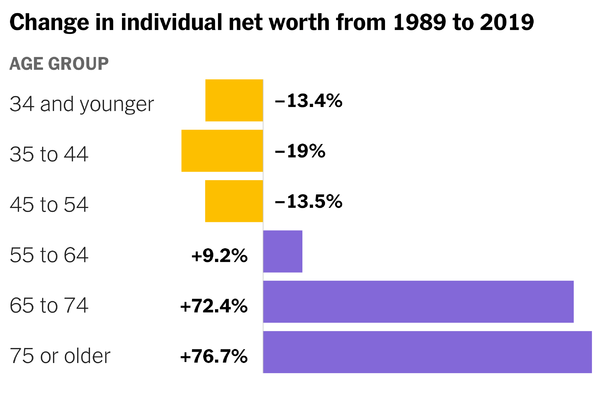
The economy is uncertain. Inflation is raging on. Americans under 54 have less money than adults three decades ago. The journey to wealth-building is challenging; however, investing is one of the greatest equalizers in skyrocketing your net worth. It is accessible to nearly everyone. Not everyone has the time, skillset, or education to become a neurosurgeon. Not everyone can become a senior manager at a Fortune 500 company. Anyone can invest, and the need to do is more important than ever.

The chart shows the median net worth, adjusted for inflation. | Source: Federal Reserve

For people to get ahead, they cannot keep their cash in inflation-losing savings accounts, CDs, or I Bonds. If you have a finite amount of discretionary funds to grow wealth, why put it in vehicles that cannot beat inflation?

A certain amount of risk is needed to get an edge. Even index investing is not enough.

I look at investing as owning a productive asset or a piece of a business. I specifically look at the underlying assertion of the productivity of that business, the return on cash based on cash flows coming out over time, and the general fundamentals around it. Over time I pull money out of my investments and hopefully get more out of them than I originally put in when I bought them.

Fewer people today look at investing like this. The average investor today holds a stock for about 5.5 months. In the 1950s, the average investor held onto their shares for nearly a decade.

Today more people look at investing as paying x amount for x asset and look to sell it to someone else for y. Many people treat their stocks more like collectibles or poker chips than shares of an actual company.

There is absolutely nothing wrong with this mindset; however, it is clear that this is not long-term investing, which is one of the best pathways to becoming wealthy. I look at my managing my portfolio as operating a business. Typically, business owners do not start a business and make day-to-day decisions to sell it for a profit six months later.

Here is where I would allocate $100,000 today under the heavy influence of long-termism. The average holding period is 5-10 years, probably longer if the company’s fundamentals remain favorable.

$10,000

Revolve Group Inc
Industry: E-commerce/Fashion Retail
Risk: Medium
Holding Period: 5-10 years
Do I already own it? Yes
An alternative company to consider: Lululemon Athletica

In the e-commerce industry, you will have trouble finding a cash flow-positive growing company with no long-term debt. Revolve Group managed through the pandemic and will likely weather a recession better than its competitors. Revolve caters to a higher-income segment, which is less affected by inflation. They will survive while many of their debt-burdened peers will crater, clearing away the competition.

Why am I so bullish on Revolve? They can operate nimbly compared to a larger department store chain like Macy’s or Nordstrom. Traditional apparel retail struggled before the pandemic, so it is no surprise they would have trouble as the economy turned. Revolve has no physical retail presence with a business model that can be modeled globally. They can grow quickly and more efficiently with a concentration on technology, data, and social media influencers.

Revolve advertises where consumers spend most of their time on Tik Tok and Instagram. This digital-first approach strengthens their brand name and allows them to connect with Millennial and Gen Z consumers. Most big-chain apparel retailers spend significant money on traditional media advertisements – magazines, TV, radio, and billboards. In the All-in Podcast, David Friedberg said, “if you don’t naturally have content creation in your blood, you have to go buy a content business, or you are going to die. In the future, all advertising and marketing get replaced by content creation.” Revolve will continue to eat Macy’s and Nordstrom’s lunch while growing its massive social media following, leading to partnerships and collaborations with emerging designers.

More companies will utilize influencer marketing and copy Revolve’s advertising strategy; however, it takes decades, if not more, to develop a luxury brand. The balancing act from being a cool, aspirational lifestyle brand to being affordable to mass consumers is tricky. Revolve knows its core demographic: college-educated women with an income of around $100,000. They target that specific demographic instead of value-oriented customers. By elevating the brand, you can raise prices. Most mid-tier luxury brands like Nordstrom or Macy’s have failed to elevate their brand over the past decade. I believe Revolve is on the path to becoming a valuable luxury brand. The fear of a recession will not cause me to sell my shares; I will likely buy more.

$10,000

MercadoLibre, Inc.
Industry: Multinational Technology/Shipping/Financial
Risk: Medium
Holding Period: 5-10 years
Do I already own it? Yes
An alternative company to consider: Amazon

MercardoLibre, in a simplistic explanation, is the Amazon of Latin America. Mercado libre, envios, crédito, shops, pago, and publicidad means a lot of industries and growth opportunities.

MercadoLibre is a rare company because of the many positive catalysts; investing in the stock is a no-brainer. The more important question is, why would I pick them over Amazon? There is no right or wrong answer; however, MercadoLibre is building a profitable moat. The total addressable market is enormous, and MercadoLibre is creating an impenetrable business apparatus in Latin America. They have a regional/first-mover advantage, giving them an edge over Amazon and Sea Limited.

The stock to buy and hold forever. One of the biggest knocks on single-stock investing is the risk of investing in one company. MercardoLibre is, in reality, six different businesses in multiple countries, all under one parent company.

Barring a leadership change or extreme political volatility in Latin American countries, this is one stock I am not selling.

$10,000

Roblox
Industry: Online gaming/Metaverse
Risk: Medium-to-High
Holding Period: 10 years
Do I already own it? No
An alternative company to consider: Unity Software

Question: Do you think the Metaverse will be massively popular and profitable in the future? If the answer is no, there is no reason to invest in Roblox or other Metaverse companies.

Roblox is widely popular, with a robust number of daily active users. My question for the CEO David Baszucki is whether he wants to prioritize monetizing its users or building a high-quality immersive metaverse-like experience.

Roblox is in its beginning stages of growth, so focusing on monetization would likely be destructive for its long-term growth projection. Roblox is a popular game for younger children that offers a crude metaverse experience. For the stock to be a major winner, Roblox needs to attract an older audience and build a genuinely immersive metaverse-like experience. We are still 3-7 years away from the software, hardware, and technology ready to bring the Metaverse to life. Until that time, Roblox cannot fully monetize its users. Baszucki should focus on tinkering and building the most enjoyable gaming platform.

I was considering buying the stock in the 20-25 price range, so I will be patient and sit on the sidelines temporarily. Given the stock price volatility, it will eventually enter an attractive buy category. Investors that want Roblox to focus on profitability and monetization now are too impatient, and I question their reasons for buying the stock. It would be like Netflix trying to monetize on an amusement park still under construction.

What attracts me to Roblox as an investment is that the environment they have built is very kid friendly and safe. More of their revenue goes towards infrastructure, trust & safety, research, & development. Since their core demographic is minors, it is essential to fund trust & safety to preserve a strong brand name and create a network effect.

Roblox’s technology and brand name are too valuable for the company to go belly-up. At the right price, there is a safety of margin. Worst-case, Roblox struggles and gets sold to a company like Disney, Meta, Microsoft, or Netflix, which creates a long-term floor price of around 10-30. Disney would probably overpay for Roblox right now if they were for sale. The upside for a company like Roblox is very high, creating an attractive risk-reward profile.

More Than 1/5 Of Meta Staff Work In the AR/VR Division

$10,000

Meta
Industry: Multinational Technology/Metaverse
Risk: Medium
Holding Period: 10 years
Do I already own it? Yes
An alternative company to consider: Apple

Meta is a wildly profitable business that is stable by most financial metrics. They have no long-term debt. Revenue, net income, and free cash flow are the best for any company worldwide.

For Meta to be considered an actual growth technology company, it must take one step back to take a giant leap forward. Spending on its Reality Labs business will be a money-losing endeavor in the billions for the foreseeable future. The market for the Metaverse is niche at the moment but may be worth over $3-10 trillion by 2030. Losing money now on the Metaverse is necessary for Meta’s future growth.

Going all in on the Metaverse may seem risky; however, it is a risk worth taking for Meta and Mark Zuckerberg:

  • They have the cash to burn: Would Meta be better off just keeping their hoard of money or spending it on R&D to find its next growth driver?
  • They have the people: Billions of people already use a platform owned by Meta. It would be logistically easier for people with Facebook, and Instagram accounts to go on Horizon Worlds rather than a brand-new platform. Think of it like this: If you are eating at a restaurant and finish the main course but want dessert, would you walk a few blocks away to a different restaurant or order from the menu from where you just finished your meal?
  • Myspace and Yahoo: The social networking landscape will change, and Meta has to be prepared for Facebook and Instagram to become less popular. Millennials do not hang out in the same space that Gen X did. Gen Z prefers using TikTok as their networking app of choice. Gen Alpha will likely hang out in a different space from Gen Z. Behavior and preferences change over time.
  • Move away from Apple’s thumb: Apple’s ATT framework costs billions of dollars annually in lost ad revenue for Meta. Apple iOS dominates the U.S. market. Meta will not create a competitor to the iPhone, but the Metaverse is a new space where Apple doesn’t have complete control.

Mark Zuckerberg is a ruthless operator. Just because he isn’t likable has nothing to do with the company’s fundamentals. Meta can responsibly fund the Metaverse without going into debt. This gives them a significant advantage over less profitable companies. If the Metaverse becomes a true extension of the internet, the space will have multiple winners, likely including Meta.

The Metaverse is a big opportunity, and already you hear a lot of people in denial about how big it will be. This is another critical aspect of investing: having an open mind. You won’t make money with ideological thinking. Yes, people did say once the internet was a fad, the iPhone wouldn’t get a big market share, and Netflix was overvalued… back in 2003! I am taking advantage of the Metaverse as an investment before the sector soars more than 1,000%.

Jensen Huang was named one of Time Magazine’s 100 Most Influential People of 2021. He leads one of the most influential technology companies in the world.

$10,000

Nvidia
Industry: Multinational Technology
Risk: Medium
Holding Period: 10 years
Do I already own it? Yes
An alternative company to consider: Tesla

If you invest in technology, Nvidia is a must-own company. Nvidia is the most important technology company in the world – not Apple, Tesla, Google, or Microsoft.

  • AI infrastructure chips and platforms.
  • ORIN Robotics processor: Nearly every company working on AVs uses Nvidia technology.
  • NVIDIA Omniverse: The ability to create 3D worlds.

From Evercore ISI analyst C.J. Muse:

“Advancements across in vehicle technologies, data center capabilities, connectivity, and AI/simulation (Omniverse) are enabling a transformation in the automotive industry today, leading to an estimated $2 trillion opportunity from the monetization of car services over the coming decade (largely led by Autonomous Driving and/or Mobility-as-a-Service).”

Nvidia is the most important tech company on planet

Jim Breyer, founder and CEO of Breyer Capital on Nvidia: “they are so far ahead of everyone else in building semiconductor infrastructure for AI and quantum. They are so far ahead of anyone in China or Europe.”

The company is more than about chips. Nvidia is shaping nearly every innovative technology. Any significant pullbacks in the stock should be bought immediately. Nvidia has become the unquestioned leader in innovative AI technology leapfrogging over the competition. It is the best in class in its sector, with one of the top-performing CEOs in Jensen Huang. It will be negligent not to own this stock if you are an investor in technology.

When I began investing, I specifically looked at the best of the best. Invest in the highest quality companies in growing sectors with solid management. This investing style doesn’t always produce astronomical gains as best-of-breed type stocks are typically overvalued; however, this strategy usually wins in the long term.

$10,000

ATAI Life Sciences
Industry: Biopharmaceutical/Psychedelics
Risk: High
Holding Period: 10 years
Do I already own it? Yes
An alternative company to consider: Compass Pathway

Clinical-stage biopharmaceutical companies are not everyone’s cup of tea. Owning these stocks is not for the faint of heart. Atai has a drug called PCN-101/R-Ketamine in its pipeline, a potential game changer for treatment-resistant depression. Imagine a drug that:

  • Provides rapid antidepressant effects
  • Able to be taken at home and not at the doctor’s office
  • Limited dissociative (psychedelic) side effects

A non-psychedelic, rapidly acting antidepressant that reduces depressive symptoms within an hour of administration can last up to seven days. PCN-101 is currently in Phase II of clinical trials, but early results are promising. Atai is Compass Pathways’ biggest shareholder, meaning any breakthrough with psilocybin therapy and trials benefits Atai shareholders.

Atai Life Sciences is backed by billionaires Peter Thiel and Christian Angermayer. I look at Atai more as an incubator and holder of several clinical-stage pharmaceutical companies. The approach is more decentralized and can pay off if the FDA gives these drugs the green light. I am not blind to the risk associated with early-stage biotech companies. That’s why I have my hands in MindMed (LSD focused), Compass Pathway (Psilocybin focused), Atai (r-Ketamine focused), and Field Trip (Ketamine Therapy focused). I am confident at least one of these companies has a blockbuster drug in its pipeline.

Here is a good discussion on Psychedelics from Luke Lango, a senior technology analyst at InvestorPlace. He argued that for Pyschedlics to take off as their category of medicine, they need mainstream consumer destigmatization (which is happening right now) and sound data/science.

The science and data have always been sound for Psychedelics, and global decriminalization in more countries and cities comes with more mainstream destigmatization.

I expect explosive growth in the Psychedelic drugs market. The current market size is around $490 million. By 2030 that market size could reach $4-10 billion. Like with the Metaverse, there will be several winners in this space. I want to warn investors in this space though you need to be extremely patient. I have, at minimum, a 5-8 year investing horizon on psychedelics as an investment.

$10,000

Alphabet
Industry: Multinational Technology
Risk: Low
Holding Period: 10 years
Do I already own it? Yes
An alternative company to consider: Microsoft

Alphabet is a highly well-run and financially stable company. The stock will not likely 10X in the next ten years however, I view them as a ballast to provide stability to my portfolio. I also consider Alphabet as my savings account. In terms of safety, you will not find a safer technology company that provides a consistent growth rate. Alphabet is a cash cow with a clean balance sheet.

Nearly everyone knows how profitable the core businesses for Alphabet are: Google Cloud, YouTube, Traffic Acquisition Costs, and digital advertising. The reason to own this stock is that Alphabet’s Other Bets are paying off. Q1 revenue from Other Bets more than doubled by $440 million from the year prior. I could see these subsidiary divisions of Alphabets eventually driving revenue growth in the long term.

By 2030 Waymo could own the lion’s share global self-driving market, a potential trillion-dollar industry. Alphabet’s drone service Wing delivered 100k packages in 2021. It took around three years to complete 100k deliveries. Six months later, they doubled that to 200k packages in just six months. The great thing about being an investor of Alphabet is that you get these potential growth engines without fearing the company going bankrupt.

Investing in this company is an easy decision. It would be like bunting against the shift in baseball. I am forgoing a double or home run; however, the probability of getting on base is extremely high.

$10,000

Lemonade
Industry: Insurance
Risk: High
Holding Period: 10 years
Do I already own it? Yes
An alternative company to consider: SoFi

I love everything about Lemonade, except that it is not financially profitable. There is the risk of investing in early-stage companies. I am betting that leadership will execute and have a pathway toward profitability.

Lemonade is a full-stack digital insurance company powered by AI, behavioral economics, and driven by social good. Like Revolve, since they are primarily digital, they have a business that can expand quickly. A lot of potential investors with Lemonade look at the U.S market but forget they are available in France, Germany, and The Netherlands. The United Kingdom is likely coming soon, which will be a significant market for Lemonade.

What makes Lemonade so enticing is its secret sauce: Proprietary technology that collects about 100x more data points per customer:

Having this real-time data and predictive modeling—and being a multi-product, multi-market, multi-channel business—means that we can pivot and shift priorities quite quickly. So in Q2, we dramatically slowed our California homeowners business in several locales, while accelerating our Pet business across most states. 

The systems we have in place both capture the data needed to train our neural networks, and are built to act on their outputs in real time. Each new policyholder brings fresh data into the model, making its predictions better and sharper. We’re not aware of any other insurer who has these capabilities. And it’s not something that an old-fashioned company could simply adopt and adapt; these tools and techniques are difficult to graft onto a company that wasn’t built with them as a core design principle. 

Listening to LTV6

Lemonade is a speculative play because there is no actual proof their technology is superior. Even if it is, there is no guarantee of profitability. Insurance is a very complicated business with a lot of regulation.

Lemonade is a high-risk, high-reward play, but I think it is a smart play. Lemonade’s direct-to-consumer growth has been impressive, but it will need to create more strategic partnerships, like the one they have with SoFi. Companies adding Lemonade Pet or Term Life insurance in their benefits package to offer employees can create user growth in a less costly but more efficient manner. Lemonade has a unique ethos and mission. If they can find like-minded companies to partner with, this can fortify Lemonade’s book of business.

For example, seventy percent of U.S. households own a pet. Lemonade can continue to target individual pet owners. Still, I think there is ample opportunity to partner with ecological-friendly pet companies that can directly offer pet insurance to their employees via their benefits packages.

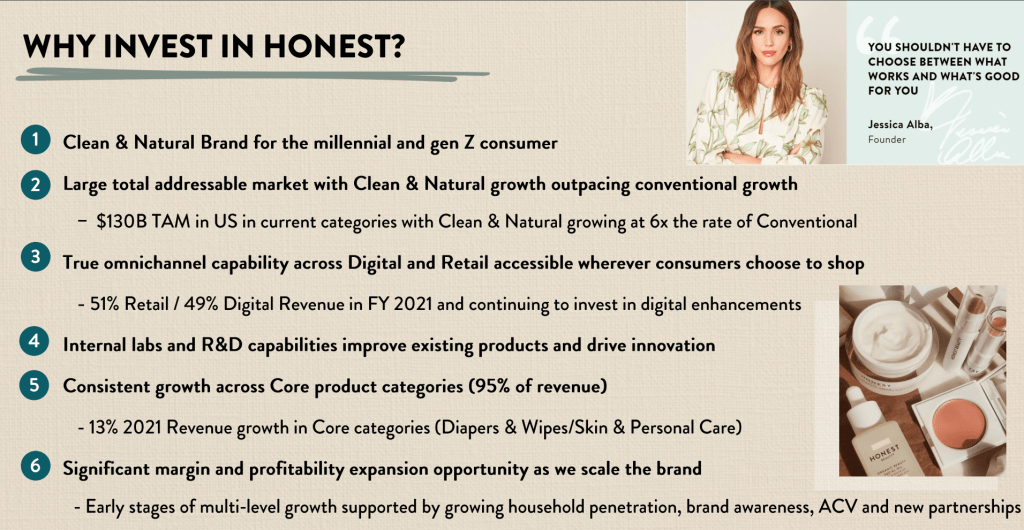
Why Invest in Honest

$10,000

The Honest Company
Industry: Consumer Goods
Risk: Low
Holding Period: 3-5 years
Do I already own it? Yes
An alternative company to consider: e.l.f. Beauty

There is a lot to like about Honest:

  • Great brand name
  • Mission-based company with a story
  • Halo effect of Jessica Alba
  • The macro trend is headed toward all-natural, organic, hypoallergenic plant-based products
  • Continuously rolling out new products
  • Partnerships with Costco, Target, Ulta Beauty, Walmart, etc.

The company is a buy right now, considering the IPO stock price was $16 a share. Honest has a massive opportunity ahead of them. Only 2% of their revenue comes outside the United States, yet 75% of Jessica Alba’s Instagram followers are international. Honest is a growing business with growth in its core products: Diapers & Wipes and Skin & Personal Care.

One problem I see is that investors who primarily focus on SaaS or high-tech growth companies try to evaluate companies in different industries similarly. Nike doesn’t have a $167 billion market cap because of their technology. You can look at Monster Beverage and Chipotle the same way. An investment or business model doesn’t have to be super complicated or even innovative to be a winner.

Honest has a strong brand, a great story, a loyal customer base, and a rockstar pitchwoman. Even with a lot of competition, Honest is still growing, and I would be shocked if they weren’t profitable by next year. Honest is in a competitive space but does well in a recessionary environment. Most importantly, Honest has strong brand awareness yet less than 6% market share in each key category. The stock is too cheap and ignores any growth expected in the future.

The Cardano-Scantrust application connects metadata on the Cardano blockchain to unique and traceable Scantrust QR codes on Baia’s wine bottles destined for international markets. This allows for detailed data visualization built from every touchpoint and interaction along Baia’s Wine supply chain journey.

$10,000

Cardano
Industry: Cryptocurrency
Risk: High
Holding Period: 10-15 years
Do I already own it? Yes
An alternative company to consider: Ethereum

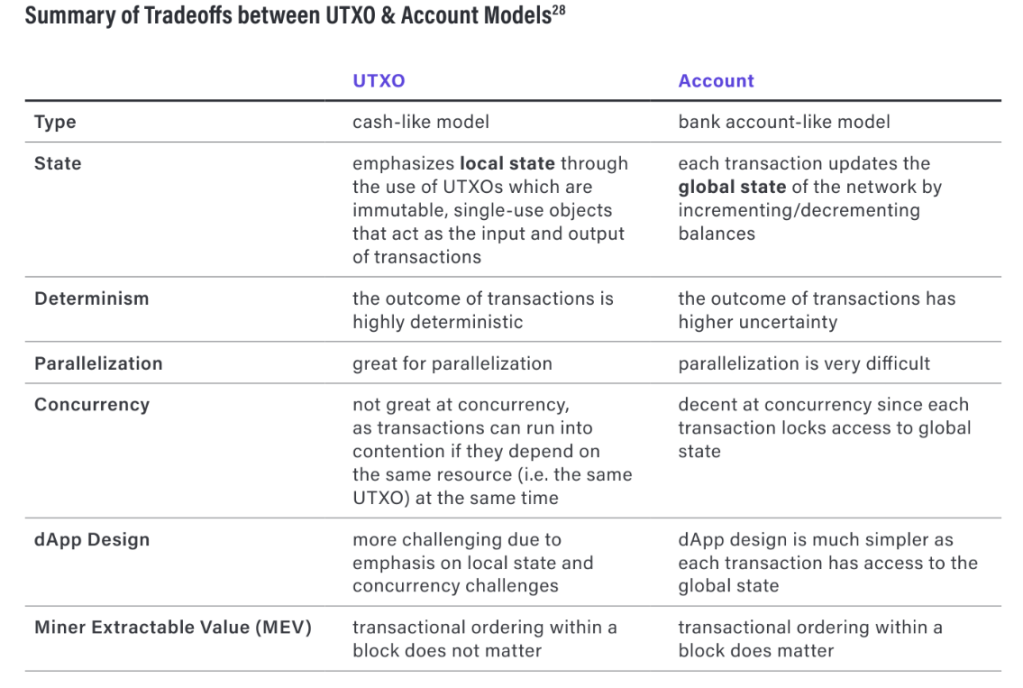
I am intrigued by Cardano because they utilize the UTxO model, compared to the accounts model used by Ethereum.

UTxO explained:

The UTxO model is the unspent balance of a previous transaction, which can be spent in the future.

UTxO chains do not have accounts; instead, coins are stored as a list of UTxOs, and transactions are created by consuming existing UTxOs and producing new ones in their place.

The balance is the sum of UTxOs controlled by a wallet. UTxOs are similar to cash in that they use “change”, and are indivisible (UTxOs are used in full), i.e. if you have to pay $50 and you have a $100 bill (UTxO), you must hand it over in full and receive change in a $50 bill (new UTxO).

Accounting Models in Blockchain: UTxO, eUTxO and Account Models

Look at Cardano as the ability to make crypto transactions without needing to connect to the internet, a cash-based system. This is a significant opportunity in the unbanked market, particularly in Africa and South America.

Cardano is an attractive investment for long-term investors because they sacrifice faster development rollouts to favor higher quality development in their projects. They want to get it right the first time, which is an Apple-like approach. Cardano checks the boxes of a durable cryptocurrency:

  • Scalability: Both technical and social
  • Security: Founded on peer-reviewed research
  • Sustainability: Cardano’s energy use is just 0.01% of Bitcoin

While Cardano slowly rolls out, it can correct the mistakes of other projects that are released too quickly and fail. You have a slow-and-steady roadmap, however, one that is durable and has a long-lasting infrastructure.

The data shows that Cardano’s daily transaction volume is higher than Ethereum but transacting on Cardano is significantly cheaper than transacting on Ethereum. Cardano is a more ecological and efficient cryptocurrency. By the next decade, this will matter. The problems of cryptocurrency today will differ from those in 2030-2035.

I do not believe I am fully knowledgeable enough to speak about specifics regarding cryptocurrency, but there is too much to like about Cardano and its projects to ignore. Kraken released a research report on Cardano in February 2022 piqued my interest.

With Cardano or any other investment, I always ask is if the company or project solving a problem. Are they improving on an existing solution and making it more efficient? With Cardano, the answer is an empathetic yes. Take Baia’s Winery, a small family winery in Georgia (the country, not the state). Baia’s Wine utilizes Cardano’s Blockchain system for authenticity, which creates transparency in its supply chain and fights off counterfeits.

In conclusion, remember the importance of diversity. No matter how optimistic or knowledgeable you are about a specific investment, you don’t know the outcome.

Anybody that says they do is probably full of it. This is the unavoidable risk of investing; however, that does not mean you should avoid investing. Making 10-20 investments and getting just five to six right can pay off 100-fold. I believe at least five of these assets I discussed will outperform the market, and possibly one or two could be a potential 100-bagger.


Mind Games: What Makes A Great Investor Great

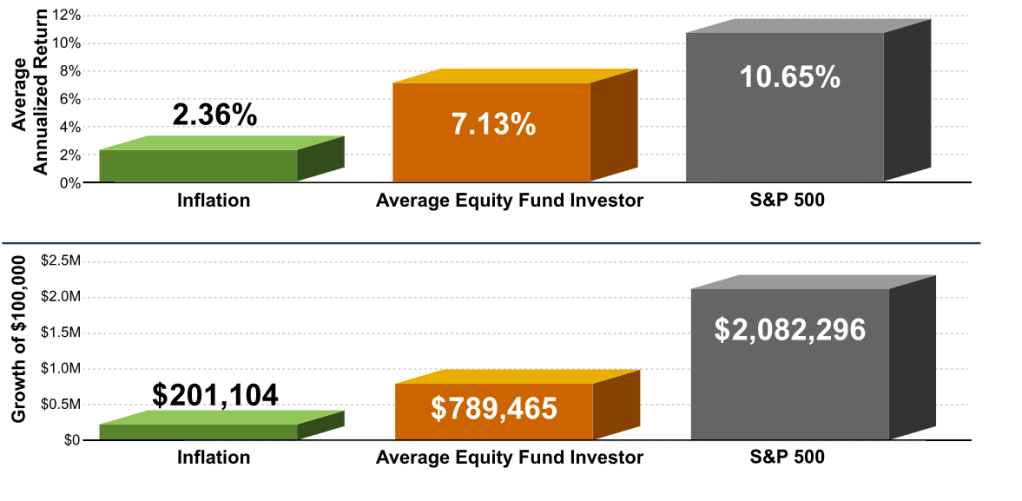
Average Equity Investor as determined by Dalbar | Study source: Dalbar QAIB 2022 study

The chart above shows the growth of $100,000 invested between the average equity investor and the S&P 500 Index for the past 30 years (through 2021).

This is one of the best charts to display whenever someone asks if you should sell your entire investment portfolio.

Even the best investors get caught up in market timing or news headline gyrations. The simple fact is a person that invested $1,000,000 30 years ago in the S&P 500 and just held would have a portfolio of over $2 million. The average equity fund investor has vastly underperformed, with a portfolio almost 2/3 lower.

Success in investing is more behavioral than it is intellectual. This is the #1 rule of investing. You must have the discipline, self-control, and commitment to a longer-term plan to succeed in investing. What you invest in does not matter if you lack these behavioral traits. You will likely underperform the market. As Warren Buffett put it: “The stock market is a device which transfers money from the impatient to the patient.”

The depressing fact is that the average investor does not have the mental and emotional strength to ride out downward market cycles. The proof is in the numbers.

Human behavior is not going to change anytime soon. If more people had self-discipline and patience, the world would not need financial advisors, fitness trainers, life coaches, etc.

Here are a few assumptions I have made about investing. I don’t think I will change my mind on these, but you never know:

You will likely underperform the market if you lack emotional stability or patience. The questions of what individual stocks or indexes you invest in are irrelevant until you correct your behavior. The good news is that you do not need an MBA from Harvard to be a great investor. The bad news: human behavior is learned throughout a person’s lifetime. Learning good behavior or unlearning bad behavioral decisions is much more complex than learning how to read a company balance sheet.

If you have the right temperament, you shouldn’t invest in indexes. It is a waste of your abilities. People do not build wealth by seeking the average return of the market. The one negative aspect of indexes that does not get enough attention is that you are not learning about valuations or actual investing.

Investing in fixed-income assets like I Bonds is bad for most people. Investing in something like I Bonds is terrible if you have a long-term horizon. $10,000 in I Bonds will likely return you about $750 in profit after taxes. $750 is not life-changing money. This profit is equivalent to doing a side hustle, which doesn’t require holding $10,000. When people run toward fixed-income assets, it is typically a sign of a scared investor. The lost opportunity cost of tieing your money in something like this for a decade or longer is massive. Those with a high net worth aren’t giving I Bonds the time of day. Putting your first $10,000 in I Bonds is bad for beginning investors trying to build their wealth because this isn’t a wealth-building activity.

Do not worry about hedging. Buy-and-hold investors should not even consider hedging. Until you have a sizeable portfolio in the seven figures, be laser-focused on growing it. Stop copying institutional investors and hedge funds. The games they play differ entirely from what most retail investors should do.

The Stock market is not a giant casino. And investing in stocks is not equivalent to buying lottery tickets. Comparing the two will likely lead beginners not to invest altogether. There is a fundamental difference between betting $10,000 on one spin of roulette vs. investing $10,000 in a company like Alphabet, which has a market cap of over $1 Trillion.

Starting your own business is hard. From LendingTree: “18.4% of private sector businesses in the U.S. fail within the first year. After five years, 49.7% have faltered, while after 10 years, 65.5% of businesses have failed. I admire those who want to start their own business because it is tough to do so. From an ROI standpoint, I would instead invest in public companies led by some of the most innovative people in the world rather than use my capital and build a company from scratch. If everyone had this mindset, we would have far fewer entrepreneurs worldwide. It also goes against the ingenuity of American ideals and prosperity. I find it peculiar that many business owners are admired as go-getters and entrepreneurs, yet stock-pickers are labeled risk-seeking gamblers. Based on statistics, entrepreneurs who start a business from scratch have worse odds of getting a higher ROI than long-term investors.

Watching CNBC can be toxic for your health. You can include all financial news channels. Most financial experts say it is impossible to predict short-term movements in the stock market, yet CNBC brings on people who make predictions on the stock market and the economy in the short term. Much news/data is delayed or irrelevant to your investment portfolio and strategy. Often you are better off holding and doing nothing instead of reacting to every earning report or news headline. My advice is to focus more on the history of financial markets and events and less on forecasts.

Great investing is a lonely journey. Having conviction is difficult when everyone – the media, family, friends, neighbors, and random people on the internet says what you are doing is wrong. Imagine being an investor in Tesla. For years you had investment managers predicting Tesla going bankrupt or the company being a giant scam. Even despite the epic performance of the company, the same critics do not say they were wrong; they just say Tesla investors got lucky. It is important to remain optimistic in the long view. You can save like a pessimist and be worried in the short term but remain optimistic in the long term.

I Just Bought More Revolve Stock

Despite challenging macroeconomic headwinds, I bought more stock in RVLV. I have never sold any shares since I started buying in 2019.

Potential investors can come up with several reasons to not buy stocks. They are missing out on a massive opportunity here. Current share prices are undervalued. It does not reflect the massive growth in sales and customers.

Q2 2022:

“In Canada, net sales quadrupled in just the past 6 quarters.”

“For the trailing 12-month period, net sales per active customer were $488, an increase of 9% year-over-year. This data is quite encouraging, considering that new customer growth has been really healthy for the past several quarters, and that revenue per customer tends to increase significantly over time.”

“I’m especially encouraged by the increased engagement with our compelling video content on TikTok and Instagram reels. In the second quarter, new views of our Titan more than doubled sequentially compared to the first quarter of 2022 and nearly tripled year-over-year.”

Revolve isn’t an apparel company. That’s what Wall Street doesn’t get. They utilize trend-forecasting algorithms and social media marketing like no other clothing company.

High Profit-Margin Business: Think Lululemon. A rare e-commerce business that churns consistently free cash flow. They will continue operating while their competitors fall or get acquired.

Impressions: More people are viewing Revolve TikTok content today than when people were forced to stay in their homes during the pandemic. The amount of impressions Revolve makes on TikTok is creating long-lasting high-value customers. To reach a bigger audience, you go on TikTok or Instagram Reels. Legacy apparel companies are still utilizing traditional advertising.

A company like Louis Vuitton was founded in 1854. Think about how long it took for them to create a premium brand name. Revolve is making quick progress, unheard of for a new luxury fashion brand not based in New York, London, Milan, or Paris.

Share prices of Revolve will be significantly higher five years from now. I am buying and holding because the exponential growth is happening now. Exponential growth in net sales and customers will eventually translate to exponential growth for investors. Stomach the volatility now to reap the rewards in the future.

Lemonade: Pathway To Profitability!

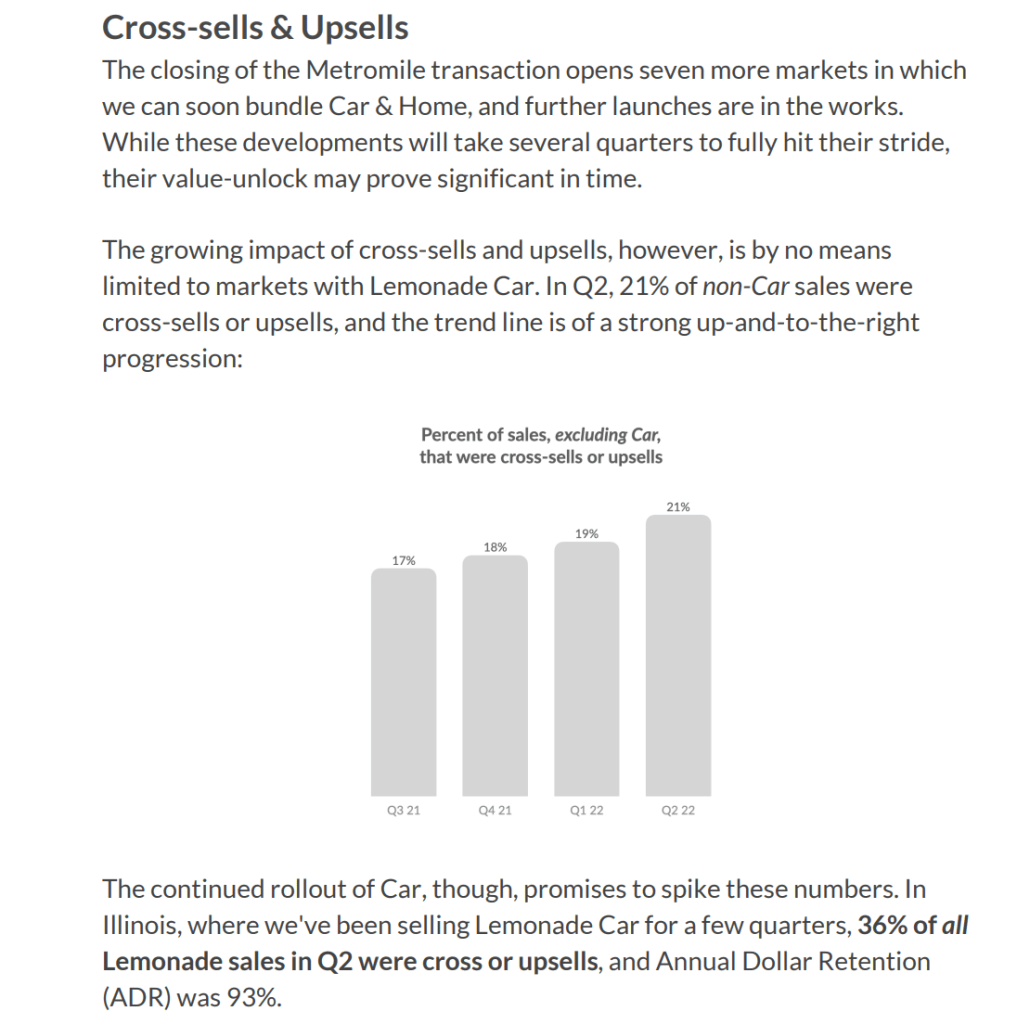
Lemonade just reported Q2 earnings, and the results were impressive. The critical piece I took from the earning call was their sales from cross and upselling:

What this means:

Cross-sells and upsells cost the company nothing. For example, Lemonade insurance is available in Florida for renters, pet, and term life insurance. When they eventually rollout homeowners, condos, and car insurance, they have current customers ready now in Florida to buy those products, just waiting for an e-mail or tweet.

Lemonade will still need to acquire new customers, which is unavoidably expensive, but the cross-selling from every new product rollout creates a pathway toward profitability:

The upshot is that even as we continue to launch new products in new
territories to new customers, we have turned a corner. We expect our losses
to peak this quarter (Q3), and to continue to shrink thereafter, charting a
clear path to profitability.

Increased cross-selling and upselling = increased profits without increasing spending.

Think of it like this: McDonald’s best-selling items are french fries, but who orders just fries? Typically people buy fries with a Big Mac, double cheeseburger, or coke. McDonald’s wouldn’t be as profitable if they just sold fries. Look at renters insurance as the fries for Lemonade.

Renters’ insurance alone won’t make Lemonade profitable or a big winner, but it does provide them with a lot of data for their AI to analyze and become more intelligent. It is also very likely if you need renters insurance, you will need pet, term life, or car insurance, at least one of those products. Customers with renters insurance typically need homeowner/condo insurance when they eventually buy a home.

Customers love Lemonade. They wouldn’t buy more products if they did not like the company. The market has several options for insurance products. For current customers to buy more products from Lemonade, show a loyal customer base and a sticky product ecosystem.

For a restaurant, you need to get customers inside the doors and hope the food, staff, and atmosphere do the rest and keep them coming back. Lemonade needs to follow that same path: Get customers into their product ecosystem and hope what separates them from other insurance companies keeps them as lifetime customers, owning several different policies.

The great news is that Lemonade has a lot of markets they have yet penetrated. The earning call presented fantastic information for the long-term picture. The company is derisking and growing at the same time. If they have all the products consumers need and want, I can one day see Lemonade as the one-stop shop for all things insurance. I will eagerly observe how this company grows in the next few years.

Revolve: The Story Is Getting Better

Kendall Jenner, Creative Director of FWRD

The stock is down mainly because of intense macroeconomic factors and expected slowing consumer demand. The apparel section is primarily discretionary spending. If higher fuel prices and operating costs hit big players like Walmart and Amazon, a smaller company like Revolve will get hit even harder.

After listening to the earning call, my conviction has not changed. The company is still strong in the long term. I did not hear anything that indicates this company is in trouble, and they have a strong chance of coming out strong if the United States enters into a deep recession.

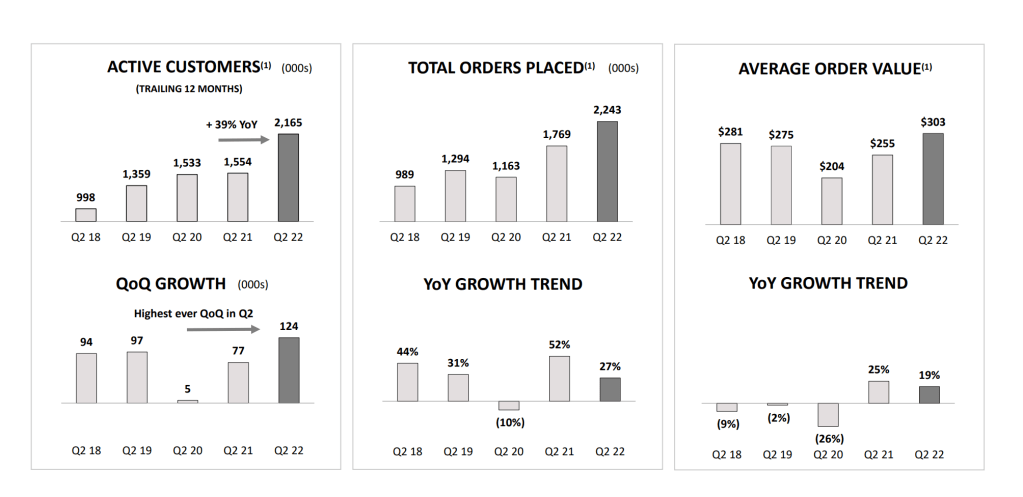
My takeaways from the earning call:

Key metrics are healthy: Revenue, Active Customers, Total Orders Placed, and Average Order Value.

The company is still growing, which is obviously important from a growth company. net sales were $290 million, which was lower than the $294.6 million expected. Not a big deal.

 The Revolve brand is centered around consumers looking and feeling great and living their best life. And certainly, right now, consumers aren’t feeling that way.

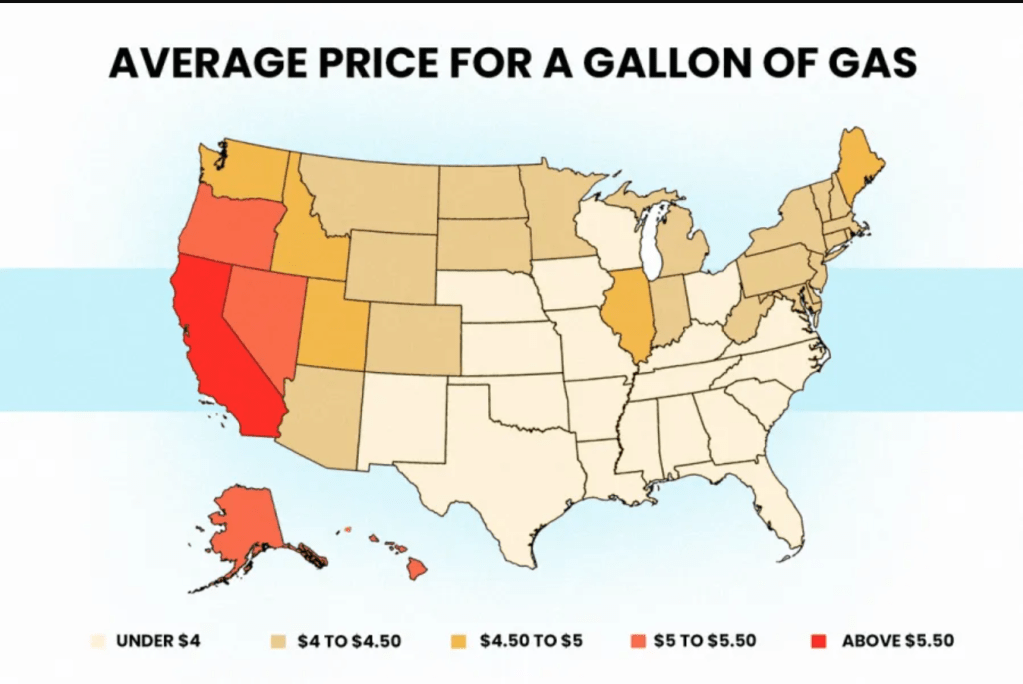
Net income was the biggest issue, which can be attributed to rising fuel costs. Fuel prices have hit California harder than any other state, and Revolve is based out of Los Angeles. They can offer 1-day delivery time frames for many regions surrounding the Los Angeles fulfillment center.

The good news is that obvious macroeconomic headwinds will likely dissipate when inflation decreases. I believe current fuel prices are unsustainably high. Revolve is also operating its first east Coast fulfillment center, which should improve delivery times for customers on the east coast.

I did not hear anything on the call indicating a weakening long-term picture. In the short term, the company is challenged due to macroeconomic pressures. Still, from a quantitative standpoint, sales, revenues, and free cash flows are significantly higher from just three years ago.

This company would survive a recession:

The cash position on our balance sheet at quarter end was more than five times higher than our cash position three years ago — on June 30, 2019, just after we completed the IPO. And this cash generation was purely operational, without external financing. A clear and powerful indicator of our operating strength and scale.

Our team and technology are battle tested and have emerged stronger through this volatile period, and we are primed and ready for what lies ahead.

Companies you need to worry about during a recession do not generate free cash flow, do not have a pathway towards profitability, and have a lot of debt on their balance sheet.

Revolve is cash flow positive and has zero long-term debt. They are also not issuing new shares, which would dilute current shareholders. What I like about Revolve is that they have a clear pathway towards growth without having to sacrifice their balance sheet. I see this as good marriage between growth and value investors: Good long-term growth/revenue with stable financials.

There is no doubt that Revolve would suffer during a recession, and they would likely see a slowdown in sales. That’s not surprising, as if a best-in-class company like Amazon is getting hit during uncertain economic times, nearly every other company in the consumer discretionary sector would likely do worse. I am confident that a company like Revolve could navigate a recession due to its strong balance sheet. They have a lot of flexibility and options if the economy worsens. They also have a growing/loyal customer base, and most importantly, their demographic is affluent, a demographic which would be less affected by a worsening economy.

The covid lockdowns, in my opinion, were a more significant existential risk to Revolve than a looming recession. I would be more worried for companies like Farfetch or Allbirds (unprofitable, debt on the balance sheet) in this type of investing environment.

Revolve is a long-term winner:

And across the business, we will continue to invest heavily in our proprietary technology, which we view as a significant competitive advantage. Mike’s team is constantly building out internal technology to drive increased conversion rates and revenue, greater operating efficiencies, and an even better experience for our customers. For instance, within just the past few months, the technology and data science teams have developed proprietary internal applications that leverage machine learning and our rich data set to further optimize the customer experience and drive further operating efficiencies through enhanced fraud detection and package optimization. And on the site, we continue to elevate our personalization, product recommendations and search functionality, and recently launched an application that leverages machine learning algorithms to dynamically, and in realtime, recommend outfits for our customers to “complete the look.” We are in the early innings of leveraging AI technology with some exciting projects in the pipeline that we believe will both drive revenue and operating efficiency in the months ahead.

However, with the demand trends shifting during the second quarter, as discussed, our inventory balance ended the quarter in a place that is higher than we would like. While we feel good about the quality of inventory, the overall balance is elevated and we are working diligently to bring it back in balance.

I have talked about Revolve to death in the past and do not want to rehash things already repeated; however, the company has proven it is operationally efficient in managing its inventory.

Revolve is dealing with a slightly elevated inventory balance which is understandable given the supply-chain bottleneck and fizzling demand for consumer discretionary spending. Compare that to Walmart, which reported excessive-inventory issues. Walmart has a $356 billion market cap. A company of that size should be operating much more efficiently. Kudos to Revolve and their leadership for navigating these uncertain times and not having a glut of unsold dresses.

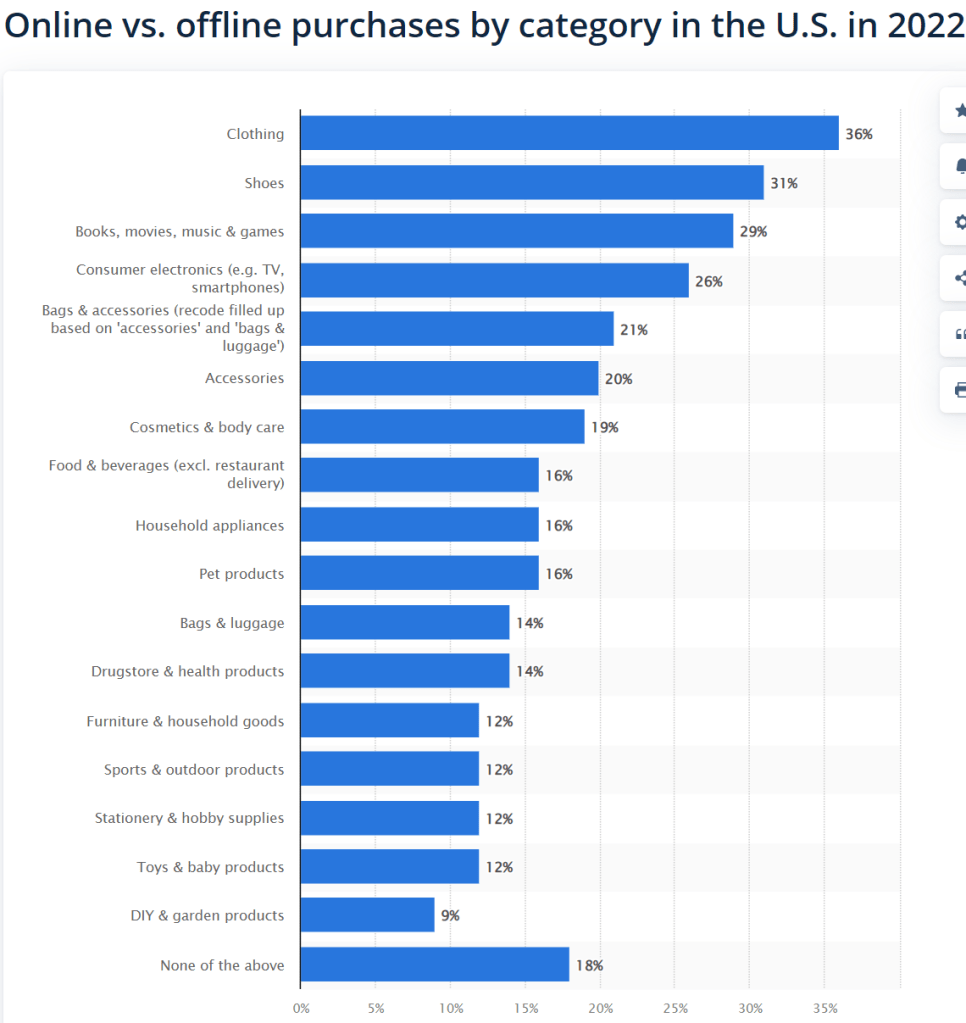
Online vs. offline purchases by category in the U.S. in 2022

Lastly, Revolve is a winner because the most considerable thing Wall Street has wrong about them is labeling them as apparel only. They are building communities through social media and live events worldwide. Disney’s brand is so strong because they are not a product company. They sell experiences. I am not saying Revolve is on the same scale as Disney, but I could see them being on par with Lululemon, which has a $40 billion market cap.

Emma Grede set up Good American with Khloé Kardashian

Revolve can become a premier lifestyle brand and generate revenue through new avenues with a strengthening brand. Revolve ability to engage with consumers through social media and in-person events is unique. Very few apparel companies are doing this. It has a customer-centric approach through data, which keeps them on the pulse on what’s trending. Revolve has created a simpatico relationship with consumers, influencers, and designers on their platform, which not even Amazon has accomplished. They all love Revolve! Here is a recent quote from Khloé Kardashian, who partnered with Revolve through her Good American brand: “We love Revolve, we love their aesthetic, everything that they have to say, and then the fact that they’re picking up the core pieces of Good American in more sizes means a lot to us. And it’s a different set of eyes that get to see Good American and see how inclusive and fabulous we are.”

Recap:

  • Operational excellence in inventory management: think like the Amazon of dresses.
  • A strong balance sheet is unique for a company of its size.
  • The trends show customers are most willing to buy clothing online over any consumer product.
  • Growing loyal and engaged consumers through social media and in-person events.
  • Personal brand momentum.
  • Companies like Nordstrom and Macy’s cannot duplicate Revolve’s business model due to their bloated size (real-estate/# of employees).
  • Proximity matters: Competing fashion companies would have trouble duplicating Revolve’s success if they were based outside of Los Angeles.
  • Somewhat recession-proof. Default risk is very low, and they will have less competition if their less profitable competitors crumble during a recession.
  • Still in the early innings of growth. Revolve is still very regionally-based. They will be significantly more profitable once they can reach nationwide and global reach.

Disclosure:

The most important thing I focus on is buying into quality companies. Valuation is important, but it is a secondary concern. I remember the famous quote from Benjamin Graham, “In the short run, the stock market is a voting machine, in the long term, it’s a weighing machine.” The actual stock price does not reflect the quality of a business and the work they do every day. Revolve is one company that I invest in because I see current shares being massively undervalued. Share prices do not reflect the quality of the business in its current state and are certainly not what they could be in the future. With my time horizon, I believe the probability is high that I will reap the rewards of what I have invested.

On a larger maco investment note, I am a long-term investor. As a long-term investor, I will suffer through nasty cycles where my portfolio suffers steep declines. In times of economic downturns, my portfolio will get crushed. I do not hedge my account. I do not buy on margin. My portfolio is mainly equity. I invest like this because I understand it is impossible to time the market. There is never a clear precursor to signal a market bottom or top. By having a long-term trajectory, I am fully guaranteed to participate when the economy starts expanding and companies rebound.

When I invest in a company, I ask myself two questions: Would I want to work there myself, and would I be okay being paid in company shares vs. a salary? The answer is two yes’s for Revolve. Employees are willing to work for bad companies as long as they are compensated well. The only reason why someone would be paid in shares of stock vs. a fixed salary is if they believed in the quality of the business. Revolve is a quality business. I have a long position in Revolve and may buy more shares soon. I have not sold one share in my portfolio since I bought the stock in 2019.

Don’t You Worry, Stocks Will Be Okay

Searches for the term ‘recession’ have spiked in June and July on Google Trends. More and more “experts” are calling for a recession; some say even a great depression. So many things are going wrong in the world:

  • Inflation
  • War in Ukraine
  • Gas prices
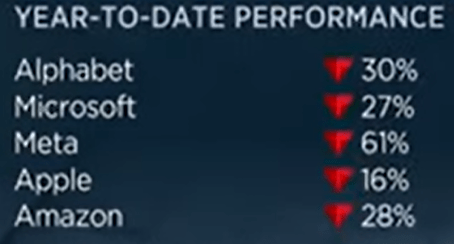
  • Tech Stocks are down 50-90%, and it could keep going down further
  • Cryptocurrencies are down big, and exchanges are collapsing
  • Supply Chain issues

Did I miss anything? Despite all the uncertainty, I am still investing. Life is full of uncertainty, but this is nothing new. Is life more uncertain now than it was when the United States invaded Iraq or during the Cuban missile crisis? What about when Japan attacked Pearl Harbor? I do not know but consider the four most dangerous words in investing: “This time is different.

If your net worth has fallen 30% or more because you own stocks Like Netflix or Zoom, I feel for you. Are we at the bottom? I don’t know. Stock prices can continue to fall.

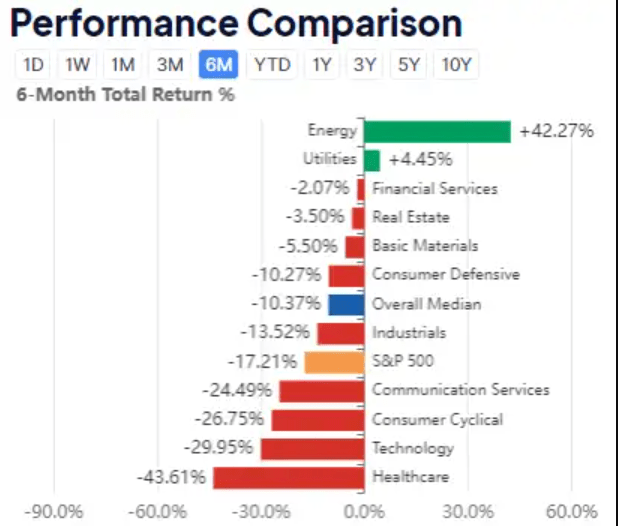
Sector performance in the last six months

It sucks buying individual stocks for the right reasons (profitability, free cash flow, revenue growth), yet the price goes down…… a lot.

As an investor, not much has gone right. The majority of investors have seen their portfolio kneecapped in 2022. You are probably in the red unless you invested in certain energy stocks or the energy sector. 

As a new investor, you may have concluded investing is a game of regulating and maintaining your emotions. You are right. For long-term investors, you have to remain optimistic about the economy. It’s easy to be pessimistic, but from a long horizon, the market has punished investors/non-investors who are overly bearish on the economy.

Market corrections and even recessions are regularly occurring events. Even asset bubbles are normal. Nobel laureate economist Robert Shiller, who is also predicting a recession, said:

One problem with the word bubble is that it creates a mental picture of an expanding soap bubble, which is destined to pop suddenly and irrevocably. But speculative bubbles are not so easily ended; indeed, they may deflate somewhat, as the story changes, and then reflate.

Speculative bubbles don’t just pop – they may deflate and reflate

Successful investing is mainly psychological:

The stock market is a game of psychology. In the long run, stocks generally going up doesn’t prevent many investors from panic selling. People, in general, are victims of the external environment around them. Since the sentiment is that the economy is going into recession, it makes sense to sell everything and avoid further losses, right?

  • Financial advisors generally advise against investing in individual stocks, yet financial news channels dedicate large segments of their reporting to individual stocks.
  • No matter how intelligent and well-informed people are, that doesn’t make them more patient, less greedy, or level-headed during times of panic.
  • Nearly every investor, even good ones, suffers from recency bias. It is incredible how much different the sentiment changed just one year ago!

The Milgram experiment showed that almost two-thirds of people would kill someone with electricity if an authority figure told them to do so. The Stanford Prison Experiment showed rather disturbing results. In a less extreme example, many people know how unhealthy it is to drink alcohol. A recent study revealed zero health benefits for young adults who drink alcohol.

If you understand the general rules of investing, anyone can be successful. Investing is not like basketball; if you want to be as good as Stephen Curry, you need particular abilities and talent. Investing is much more a game of chance and probabilities. Those that succeed are not the most intelligent people. Successful investors are those that understand the rules of the game. They have patience and impulse control.

I have said this before, and I will likely repeat this but investing is difficult mainly for the reasons above. I have read behavioral financial studies showing that stocks going down can cause you physical pain. Long-term investing is challenging because human psychology works against us. Being knowledgeable about the risks of alcohol doesn’t change how it makes you feel when you drink an alcoholic beverage. Knowing the ins and outs of a company and its financials may not prepare you for what you will feel when the stock price falls 50%.

Luck and happenstance play a significant role in investing:

No matter how smart you are. No matter how much research you do, chance plays a big factor in investing. Whether you invest in single stocks or indexes, your portfolio performance is based on many external events beyond your control.

  • Apple nearly went bankrupt in 1997. They were 90 days from bankruptcy until Microsoft made a $150 investment in Apple. Since 1997, the stock has appreciated over 90,000%
  • Yahoo turned down $1 million to buy Google in 1998. In 2002 Yahoo turned down $5 billion to buy Google. Yahoo only wanted to pay $3 billion.
  • Yahoo offered to buy Facebook for $1 billion, which Mark Zuckerberg declined.

We can play the “What If” game forever; however, even the best investors cannot deny that luck plays a major factor in their success.

Why I invest in individual stocks:

Many financial advisors advise against investing in individual stocks. They say investing in a few stocks is riskier than an index or mutual fund that tracks the stock market.

Being a former financial advisor myself, I can tell from experience that most financial advisors err on protecting your wealth rather than growing your wealth.

There is fundamentally nothing wrong with investing in index or mutual funds, however;

  • You are guaranteed average/mediocre gains. There are no outsized gains.
  • Passive index investing is essentially dumb money or investing on autopilot. There is no analysis of the fundamentals or valuations of companies.
  • Safety in this type of investing is a myth. The S&P is down over 20%. The Nasdaq is down over 30% this year. There is no guarantee the indexes will rebound.
  • Meta, Amazon. Apple, Netflix, and Alphabet make up about 19% of the S&P 500. Investing in an index that mirrors or follows the S&P is heavily weighted in just five companies.

My point is the majority of passive funds are overcrowded with money flowing toward the same stocks. It is dumb money. Although there is some safety in following the herd, and easier to mentally digest for the average investor, it locks you into mediocre returns.

Do not just look at numbers:

The art of investing comes from the idea that you have to value things that do not yet exist. The irony is that it is impossible to predict the future, but successful investors must make educated guesses. I try to ignore predicting stock prices but predict emerging social trends or technological advancements.

That’s why it is important to invest in “garbage” companies. To overperform the overall market, you have to take actual risks and speculate. The stock market is fluid; there are no guarantees that current stalwarts or trends will stay the same in the next decade.

When you look at the stocks most widely held by ETFs like Apple or Microsoft, they already returned outsized gains and are most likely overvalued. There is a prominent place for these types of stocks in your portfolio as you can look at them like a ballast; however, owning just these companies is not enough to be a solid investor.

  • Bellwether companies can decline and fall.
  • Garbage companies can emerge and become the next Tesla or Apple.
  • Since they are unprofitable, they can be oversold and undervalued.
  • Outsized gains are created while holding unprofitable companies transforming into profitable companies.
  • All it takes is a few winners to offset the losses of stocks that underperform a diversified index.

Soley looking at numbers or accounting metrics to value a stock is silly. It would be like a baseball scout evaluating players based on statistics and not watching games in person. Imagine dating people solely based on their net worth, credit score, or income. A considerable amount of subjective analysis is involved in life, including evaluating the value of companies.

Importance of being an optimist in the long-term:

“There is no sadder sight than a young pessimist.” – Mark Twain

If you hear someone say the stock market will not produce any meaningful gains in the next decade or we will enter a global recession, remember the odds are not in their favor.

I cannot guarantee that the stock market will go up in the long term but based on history, it is a strong probability.

In our society, optimistic views have been considered naive or doe-eyed. Pessimistic views have been viewed as intelligent or enlightening.

Famous psychologist Rollo May wrote in his book Love and Will that “depression is the inability to construct a future.” If you are sad or panicked due to what is happening with the financial markets, it would probably make you more likely to have trouble seeing what the world will look like in 2026 or 2027. The key is sticking with a plan and not deviating from it.

Anytime in our history during times of despair or destruction, it has created opportunities for a rebound and urgent problem-solving.

Many people are poor at saving money and spend on frivolous things:

From CNBC: Of those earning $250,000 or more, 30% live paycheck to paycheck.

From The New York Times: A recent study by Fidelity Investments found that 45 percent of people aged 18 to 35 “don’t see a point in saving until things return to normal.” In that same age group, 55 percent said they have put retirement planning on hold.

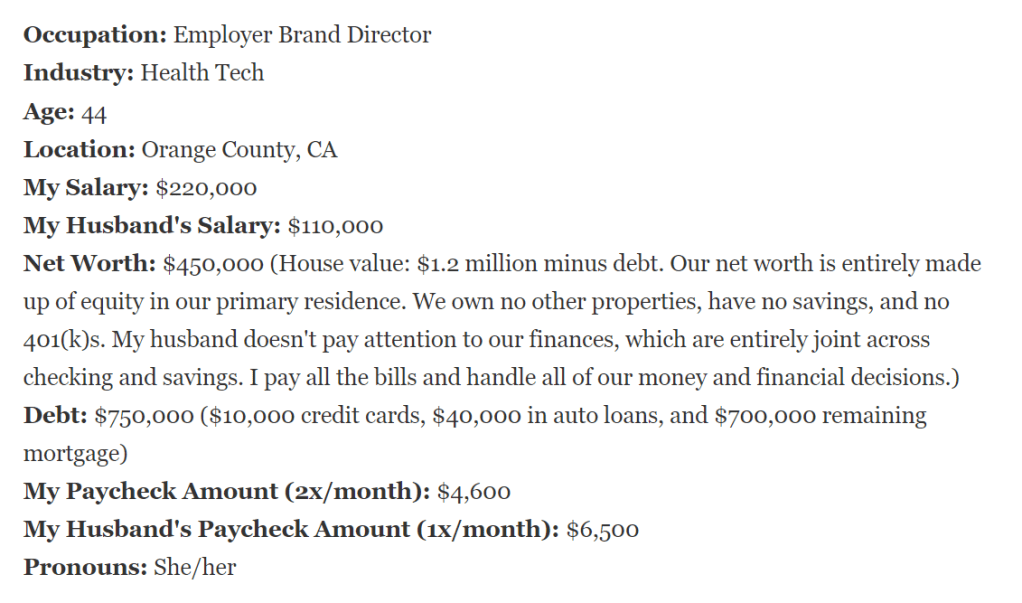
Insane story of how much an affluent wife spends in a week.

If you are living paycheck to paycheck on a 250k salary or spending $3,000 a week on single bagel app deliveries, you shouldn’t be thinking about investing.

Famous American feminist Gloria Steinem said, “the first problem for all of us, men and women, is not to learn, but to unlearn.” Consistently overspending is a recipe for disaster. Getting on a budget will require people to unlearn years or even a lifetime of bad habits.

I am investing. Many disagree with me; however, investing seems prudent vs. buying a car above its MSRP price or going on an overpriced vacation that will likely be more stressful due to global labor shortages.

Closing thoughts: Have a plan and stay optimistic.

Long-term investors,

Day Traders,

Professional Poker Players,

Sure it seems we speak different languages; however, whatever category you fit in, if you want to be successful, you need a plan and stick with it.

Most importantly, the best investing advice I can provide is to STAY OPTIMISTIC.

There is no evidence to suggest that our economy or humanity has peaked. It may seem naive to be optimistic, but it will pay off in the long run. Today is the best time to be alive in the history of humanity.

“Humanity can address a lot of the suffering that occurs in the world and make things a lot better. I think a lot of times people are quite sort of negative about the present and about the future, but really if you are a student of history, when else would you really want to be alive?” – Elon Musk

“The world is getting better, even if it doesn’t always feel that way.” – Bill Gates

“I’ll repeat what I’ve both said in the past and expect to say in future years: Babies born in America today are the luckiest crop in history.” – Warren Buffett

Hacking Bank Bonuses During A Recession

One of the best ways to earn free money is to sign up for bank bonuses. They are relatively easy to get and require minimal time. Usually, you need to move money around from a different bank, set up a direct deposit, or make a few debit purchases.

Some of the bigger banks require a deposit of $10,000+ in new money to get a $100 bonus. I have seen direct deposit requirements of $5,000 or more monthly! Here are three fintech banks offering sign-up bonuses that are easy to obtain, requiring just a few tasks. All of these banks have:

  •  No monthly fees or minimum balance requirements! You can have $1 in your account and not be charged a pesky maintenance or service fee.
  • Easily transfer money in/out to a different bank.

I found three fintech banks offering easy-to-obtain sign-up bonuses, which can help during times of high inflation and a possible looming recession.

Spiral:

Earn $50 HERE

  • Get $50 when you open a qualifying checking account, deposit at least $200 in the first 30 days, and maintain an account for at least 90 days.
  • Bonus will be paid into your Checking account within 30 days of meeting the criteria.
  • When you deposit money in your checking account, 0.25% will be moved to a separate account that will be donated to a charity of your choice. Remember, 0.25%, not 25%.
  • There is a $7 inactivity fee if you do not have any activity in your account for 90 days.
  • The Spiral app is only available on iOS; however, you can sign-up for an account on your computer.

Verdict:

There is no direct deposit requirement, and you can transfer $200 to your account for an easy $50. The charity/social good aspect is not a big issue, and it’s only 0.25%. The inactivity fee is annoying. You can just transfer $1 in your account every three months to avoid this, but with so many other fintech banks not charging such a fee, I will likely cancel my account after a year. Spiral offers a solid bank bonus for those who do not want to go through a dd requirement.

Varo

Earn $50 HERE

  • Spend $20 within 30 days of opening your Varo account. You will need to wait until you receive the physical debit card.
  • The bonus posts quickly, about 4-7 business days after meeting the spending requirement.

Verdict:

That is it. There is not much else to explain. The hardest part about this bonus is waiting for the debit card in the mail. Varo is an excellent beginner bank, and its interface is easy to navigate. I will hold onto this bank, and in the future, perhaps they will offer a direct deposit bonus.

Albert

Earn $500 HERE

*The $500 bonus has been reduced to $150. I would suggest anyone looking into this to wait for the bonus to increase. Albert reminds me of Cash App, they have a lot of generous cash back offers, such as 20% off at Whole Foods and 15% off at Etsy.

⓵ Sign up as a new Albert Cash member
⓶ Set up direct deposit with Albert Cash
⓷ After Cash signup, receive a qualifying deposit of $200 or more every 30 days for 90 consecutive days
⓸ Use your Cash card to spend $100 or more on goods or services every 30 days during the same 90-day period

Verdict:

This bonus will take a little more work; however, for $500, it’s well worth it. Typically, receiving $500 from a bank requires a deposit of $1,00,000+ or monthly deposits of $5,000+. I would snatch up this bonus asap as it will likely downgrade to $250 or $150.

When you sign up for Albert Cash, you will have to subscribe to their monthly subscription, Albert Genius, and the minimum amount is $6 a month. The bad news is I couldn’t find a way to bypass the Albert Genius screen. The good news is you can cancel or deactivate Albert Genius immediately after signing up. The first month is free, so there is no charge anyway. Per an e-mail I received from Albert Support, activating a Genius subscription is unnecessary to get the bonus. There is also an auto-saving feature that you can pause.

The great thing about these banks is that they all have referral programs that allow you to refer others using your own link. You can refer your spouse or partner, potentially earning both of you another sweet bonus. You can double or even triple the amount you can earn from bank bonuses.

For a few minutes of work consisting of transferring money, spending on bills you already pay for and linking your account through a direct deposit, you can easily earn $1,000 or more per year. $1,000+ isn’t life-changing money, but if you are one of many that complain they do not have any money to invest, here is a possible new stream of income.

If you have any questions or concerns about bank account bonuses, please let me know!

What Excites Me About Lemonade

It is one of the more exciting times to be an investor. Prices have been slashed, but the underlying thesis for many of these companies remains the same. Speculative companies with massive growth potential are still…. speculative; however, the downside risk has dissipated significantly. If these companies can still maintain their growth rates or have healthy cash balances, the risk of losing money on these investments in the long term has fallen dramatically.

Lemonade is a company whose stock has been obliterated in this market; however, the thesis remains the same:

  • Become the preeminent insurance company in the 21st century.
  • Create a digital insurance company with a different business model from traditional insurers. This model is powered by AI, telematics, and behavioral economics.
  • Turn insurance into a social good in society vs. a necessary evil. Completely change how people buy and manage insurance.

Key Metric to determine if Lemonade will succeed:

Customer Growth and Retention:

There are four key advantages traditional insurance companies have over Lemonade:

  1. More customers: This will lead to stabilized loss ratios. They have clients spread through all 50 states, which minimizes their risk from black swan events.
  2. Monopoly on good customers: The customers they have are older and wealthier. They are not likely to swap insurance companies due to their loyalty.
  3. Established brand name
  4. Stable cash balance

There is nothing Lemonade can do in the short-term about 2-4. However, Lemonade has quickly been able to find new clients. The problem is that rental and pet insurance are niche markets. Most of Lemonade’s clients are first-time insurers and are not considered profitable. The good news is these clients will eventually become profitable, which will lead to lower churn rates. Again, they won’t be able to poach away customers from legacy insurers. Those are loyal customers that won’t leave anytime soon. Lemonade MUST keep bringing in new millennials and Gen Z who care less about the status quo and enjoy Lemonade’s simple user interface, transparency, and social good aspect.

What is REALLY exciting about Lemonade’s future growth is the data from Illinois:

Q1 2022

I believe Lemonade car will be their flagship product. You have pets, renters, homeowners, life, and car as an amalgamation. Each product is valuable; however, when you bundle them all together, they have a symbiotic relationship, which allows for cross-selling.

It does not take much brainpower to realize that if Lemonade can offer its full suite of products nationwide, you will see higher bundle rates and lower churn rates as we saw in Illinois.

Imagine if you couldn’t subscribe to Netflix if you lived in California, Texas, Florida, and Texas? Evaluating Lemonade when car insurance isn’t available yet in states with the most licensed drivers creates an incomplete picture. The Metromile acquisition won’t be completed until Q2 of 2022, so we could see a rapid number of new markets in this year’s back half.

I view three critical metrics for an insurance company to succeed:

  • Continuously add new customers
  • Retain current customers
  • Underwriting.

I firmly believe that Lemonade will continue adding customers at a healthy growth rate as they have done from inception. I am confident they can retain these customers as they are popular and highly rated. They will address their churn rate by becoming a one-stop-shop for insurance. What Square is to banking, I could see Lemonade becoming to the insurance industry.

The growth is essential because for Lemonade to become profitable, they need to achieve the law of large numbers and have economies of scale. The more customers they have, the more intelligent and efficient their AI/Machine becomes in evaluating risk and underwriting. Customer growth is, thus, mandatory for the company to stabilize.

The unknowable factor is if Lemonade can effectively improve its underwriting and implement AI effectively. They have better technology. They collect 100x more data points per customer. The question is if they can use that data and technology effectively to create a profitable business. Unfortunately, we won’t find this out until they have more customers. They are also an early-stage growth company which means they have yet to reach economies of scale, and its goals are targeted toward the future, not current growth. I have confidence in their leadership and decision-making; however, taking insurance from scratch to compete with giants like State Farm will take several years to unfold.

The underwriting process is the most significant question mark for Lemonade and all other neo insurers. Here is an excerpt to explain how complicated underwriting is:

The practice of underwriting insurance is a fine mixture of art and science. To be successful, it takes a lot of common sense, even more experience and a well-rounded team of experts. Time and practice are the true keys to the profitable underwriting of life, health and disability insurances. As you can probably imagine, factors such as age, gender, occupation risk, financial viability and adverse health history play significant indicators in the underwriting of most insurance. But other, lesser obvious factors come into play when working in the specialty-risk side of the life and health marketplace.

The Nuances of Specialty-Risk Underwriting

During a Tesla earnings call back in October 2020, Musk said insurance someday could represent 30% to 40% of Tesla’s auto business. He boasted that Tesla is building “a major insurance company.”

The industry is ripe for massive disruption. It is inefficient and outdated, but entrenched companies are massively profitable. Companies like Lemonade, Root Insurance, and Hippo Insurance have slowly chipped away on legacy insurance. If you are still skeptical about this insurance revolution, consider what Elon Musk just recently said:

“The car insurance industry is incredibly inefficient,” Musk told attendees of the All-In Summit in Miami, which he joined virtually for almost 90 minutes. “You’ve got so many middle entities, from insurance agents all the way to the final reinsurer, there’s like a half-dozen companies each taking a cut.”

Tesla Bets It Can Bring Down Insurance Costs, Make Driving Safer

Tesla underwrites its own policies. They are entering auto insurance more aggressively. Will they succeed? I am not sure. The more this industry is disrupted, the better chance companies like Lemonade can take massive market share away from legacy insurers. If Telsa does become a major insurance company, they are only in one market dealing with Tesla vehicles. Lemonade has the entire insurance market.

I look at Lemonade like a small fire. Once it spreads, it can do so rapidly at an uncontrollable rate. Lemonade’s operating team runs in a very autonomous and frictionless way, which is why they have had success in an industry that typically moves at the speed of molasse. It’s like their version of “Move fast and break things.” I look at them more like a tech company than an insurance company.

From an operational standpoint, Lemonade moves from how to get from point A to D while others companies are moving from point A to B. This kind of thinking makes them misunderstood, and if you do not like volatility, you shouldn’t invest in Lemonade. If you can stomach the roller coaster over the next few years, Lemonade could be a big-time winner in this space.

Reddit React: I am Done Playing Single Stocks

After reading this Reddit post, I thought of one of the best Warren Buffett quotes: “If you aren’t willing to own a stock for ten years, don’t even think about owning it for ten minutes.”

If you are “playing” stocks, you are gambling, not investing. Go to a casino or bet on your sports if you want to gamble. People can gamble with stocks, but you need an actual specialized strategy and skillset to succeed.

Most people do not know where the market is going in the short term. Most long-term investors say it is not even possible to make these predictions. There is more safety in buying ETFs; however, ETFs, Indexes, and Mutal Funds most likely tank along with individual stocks in a recession or a sharp downward market.

An investor’s best friend is time. I remember an investor telling me a story about buying stock in Netflix in 2011. The stock price cratered by 80% because they hiked the cost of their service by more than 60%.

If you had bought Netflix stock at the high of 2011 and saw your shares crash 70-80%, you would still be up by 300-400% today! If the stock price can recover, you are likely back up over 1,000%, as you were in 2021.

Watching a stock you sold soar x1,000% in price is a terrible feeling. Imagine if you bought into Netflix and believed in their streaming service plans back in 2011….. but due to fear, you completely sold out and missed out on all those gains. That is the worst type of pain you can experience. Even worse than watching a stock price fall to rock bottom. Imagine how the co-founder of Apple felt who quit and sold his 10% of Apple back to Steve Wozniak and Steve Jobs for $800 in 1976.

If you are playing with stocks do not forget these are real businesses run by real people. By owning just one share, you are a shareholder of the company. Most games you play produce binary events, winner or loser. Business is quite a bit more multifaceted. There could be several winners or several losers. Some companies can lag for decades and eventually become grossly profitable.

Always remember time is the most powerful force in investing. It makes little things grow big and big mistakes fade away.